
Last updated November 4, 2026
 Wrought iron
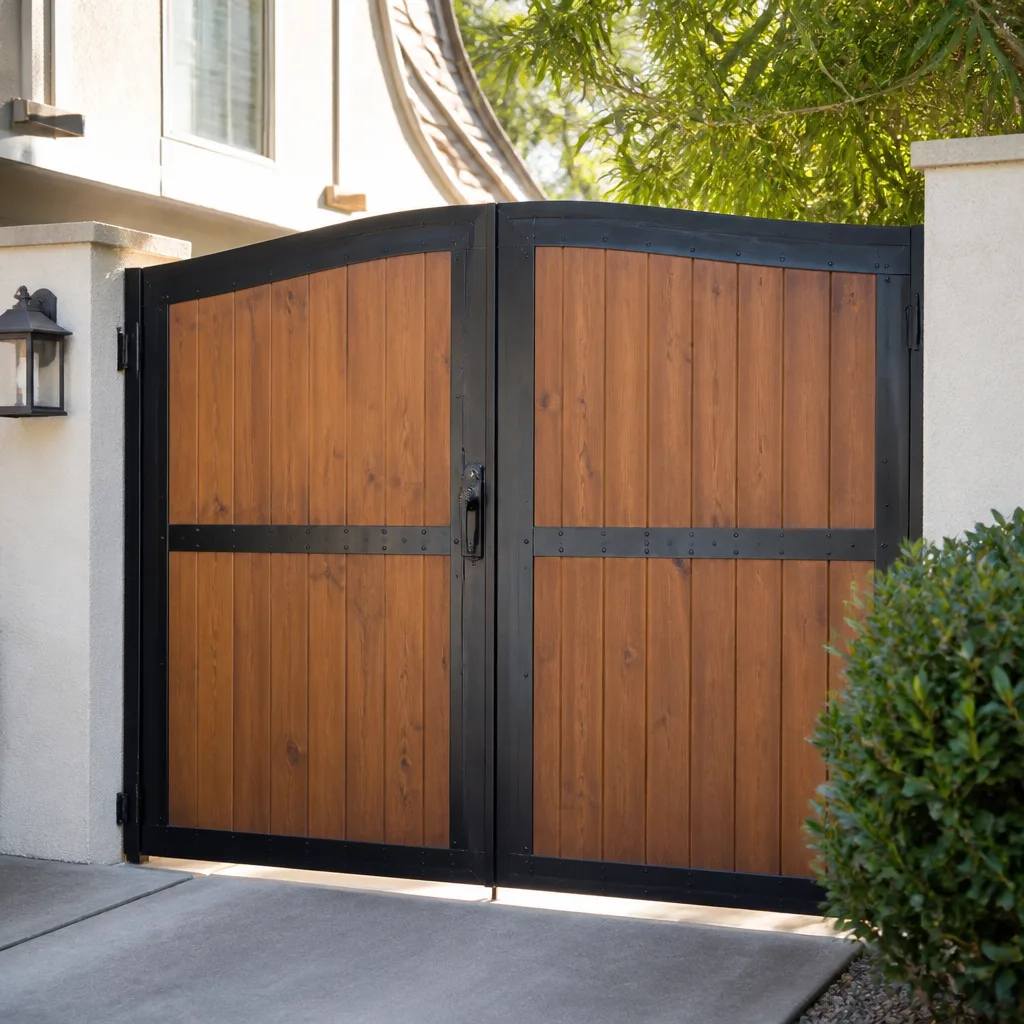 Wood & steel frame
 Farm & ranch
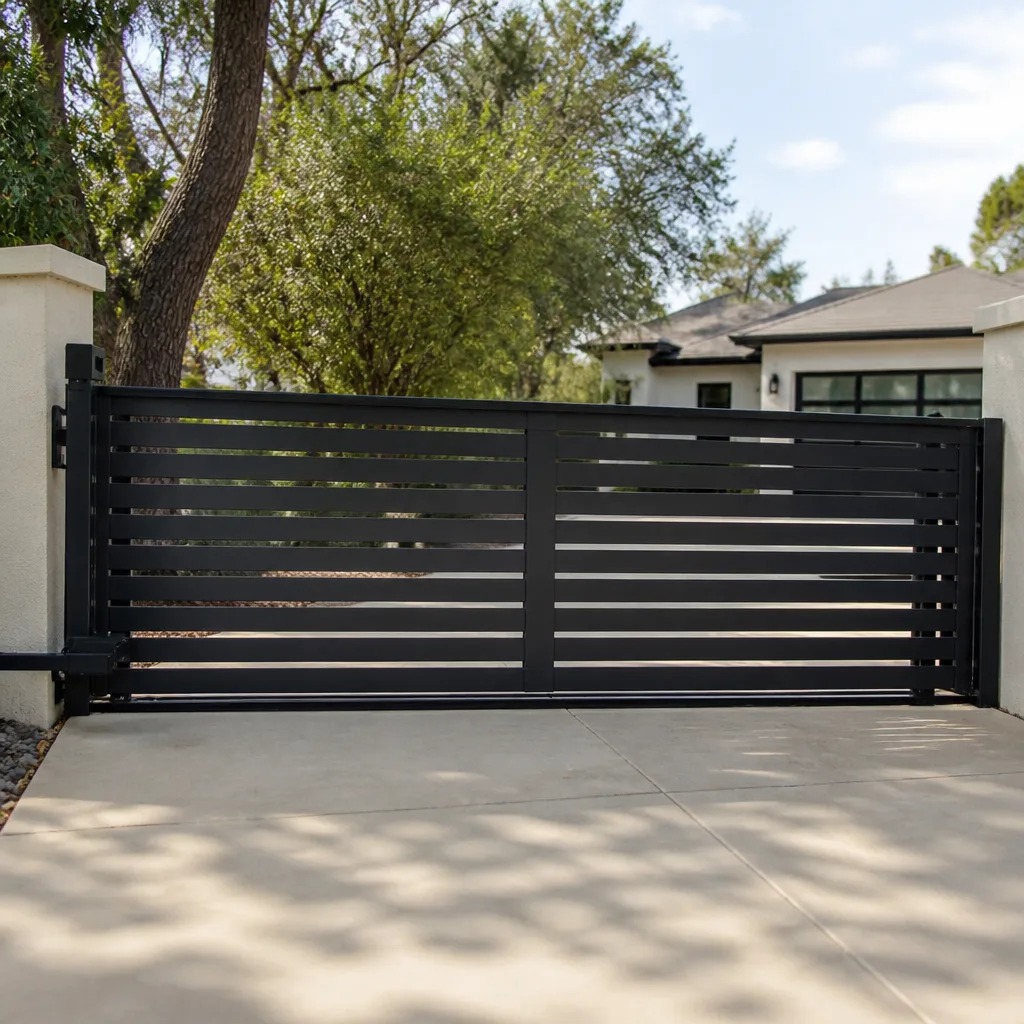 Sliding driveway gates
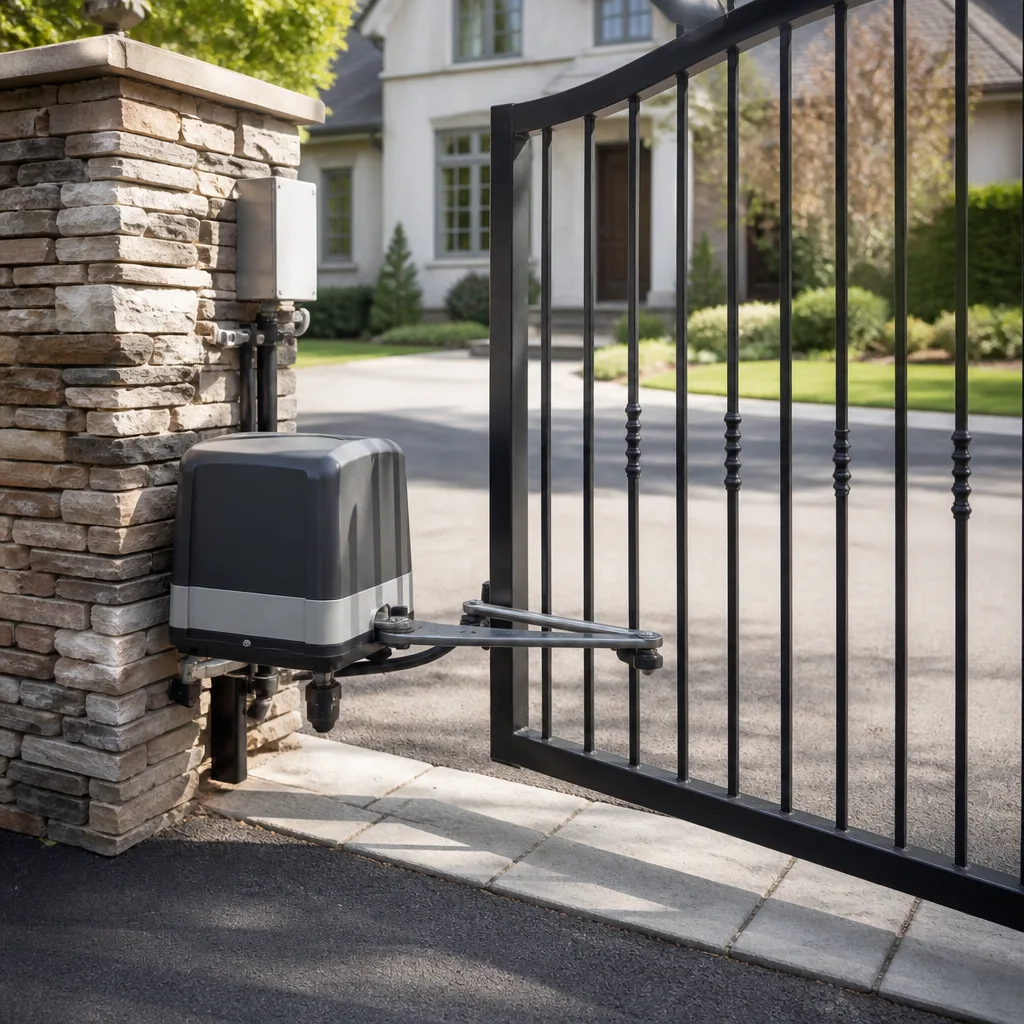 LiftMaster operators
Free on-site gate assessment - hinges, posts, and your LiftMaster or Nice gate operator checked before anything is quoted
The assessment is free and the quote is the invoice.
Get your free estimateSeasonal Gate Repair Care for San Jose: Year-Round Homeowner’s Guide
San Jose’s climate looks forgiving on paper. No snow to shovel off gate tracks, no freeze-thaw heaving the posts, no salt spray eating the hinges. But that mildness hides a pattern that catches a lot of gate owners off guard: the Santa Clara Valley swings between long, bone-dry summers and a short, intense wet season that drops the majority of the year’s rain in about three months. That swing is exactly what stresses automated gate systems the most. This guide walks through what actually fails here, when, and what to check at each seasonal transition so your gate keeps working without a surprise breakdown.
Quick Answer
Seasonal gate care in San Jose comes down to two checkpoints per year: October, before the winter rains arrive, and March, once they taper off. October focuses on drainage, gasket integrity, and corrosion prevention. March focuses on drying-related electrical issues, swollen wood components, and hinge rust from sustained moisture. Between those checkpoints, summer brings its own set of heat-related problems, especially for west-facing operators and battery backup systems.
Styles & brands we work with
- Wrought iron
- Wood & steel frame
- Farm & ranch
- Sliding driveway gates
- LiftMaster operators
Table of Contents
- Why San Jose’s Climate Breaks Gates Differently
- The October Pre-Wet-Season Gate Checklist
- What the Rainy Season Actually Does to Gate Hardware
- The March Post-Wet-Season Gate Checklist
- Summer-Specific Gate Problems in the Valley Heat
- Battery Backup and the San Jose Heat
- How Your Operator Brand Handles Seasonal Stress
- Common Mistakes to Avoid
- When to Call a Professional
- Frequently Asked Questions
Why San Jose’s Climate Breaks Gates Differently
San Jose averages under 15 inches of rain annually, but roughly 60% of it lands in a compact window between December and February. That means underground gate actuators and low-mounted control boxes go from months of dust-dry conditions to saturated soil and standing water almost overnight. The transition is abrupt, not gradual. Drainage paths that worked fine through October suddenly face more water in a week than they saw in the previous eight months combined. We’ve watched this pattern play out enough times to know that the week after the first real downpour is when the emergency calls start coming in. Knowing that, the smart move is a pre-emptive check before the rain hits, not after.
Summer presents the opposite challenge. The south San Jose valley floor, including Blossom Valley, routinely sees daytime highs in the 85 to 95 degree range from June through September. That heat radiates off driveways and stucco walls, pushing surface temperatures on gate equipment higher still. Metal housings expand, photo-eyes shift on their mounts, and electronics inside sealed operator boxes cook. A gate that ran perfectly all spring can intermittently refuse to close in August heat, and the cause is rarely what the homeowner guesses. It’s not a broken arm or a stripped gear. More often, it’s a thermally-expanded limit switch or a photo-eye that drifted just enough to throw a fault code.
The October Pre-Wet-Season Gate Checklist
October is the single most important month for gate repair prevention in San Jose. The rains are still a few weeks out, the ground is dry, and everything is accessible. An hour of checking now prevents most of the failures we see in January.
What to Do in October
- Inspect underground actuator drainage. If your gate uses an underground linear actuator (common on swing gates), find the access pit or box. Clear away accumulated dirt, leaves, and debris. The gravel or drainage channel around the housing should be clear, not clogged with silt. When that gravel pack plugs, water pools directly against the actuator casing. Once the casing is submerged even an inch, water wicks through the cable conduit into the unit itself.
- Check the control box gasket. Open the control box and examine the rubber gasket around the door or lid. In San Jose’s dry air, these gaskets dry out, shrink, and crack without ever looking visibly damaged from the outside. Press it with your thumbnail. If it’s hard instead of springy, it’s done. A failed gasket on a box mounted north-facing or under a drip line is a slow leak waiting for the first storm.
- Assess fasteners and hinges for existing corrosion. Inland San Jose doesn’t produce the heavy rust you see near the coast, but the wet season creates micro-conditions perfect for it: warm daytime temps, cool nights, and trapped moisture. Run your hand along hinge bolts, gate track brackets, and the operator mounting plate. If you feel flaking or see rust streaks starting, treat them now before the rains add fuel.
- Verify the safety loops and photo-eyes are clean. Dust and cobwebs build up through the dry season. A loop sensor buried under six months of driveway silt won’t detect a car properly once it’s wet, and a photo-eye caked with dust won’t see anything. Clean both gently. Test the gate’s reversing function before you walk away.
- Confirm the manual release works. Every automated gate should have a way to operate it manually during a power outage. October is the time to test it, not during a storm at night. Whether it’s a keyed release on a LiftMaster or a pull chain on a Mighty Mule operator, work the mechanism once, apply fresh lubricant if it’s stiff, and make sure the key isn’t lost.
What the Rainy Season Actually Does to Gate Hardware
Between December and February, San Jose gates face sustained moisture for the first time since March. That moisture works on three fronts. First, electrical: any crack in a gasket, any loose cable gland, any unsealed splice becomes a water entry point. Water inside a control board is rarely catastrophic immediately. It starts as intermittent faults: the gate stutters, a limit switch misreads, a keypad dies for a day and then works again. By the time it’s consistent, the board has been corroding for weeks.
Second, mechanical: the wet season causes wood gate frames and panels to swell. Wood-frame gates in Blossom Valley and across San Jose absorb moisture unevenly, especially at the bottom rail and around the hinge mounts. A gate that cleared its catch post by half an inch in October can scrape or bind by February because the frame expanded. That binding then overworks the operator, which pulls more current, which stresses the board and the motor.
Third, environmental: decomposing leaves and wet clay soil shift. Southern San Jose has heavy clay pockets. Clay expands when wet, which can push against buried conduit, disturb post footings slightly, and change how the gate sits relative to its automatic lock. A gate that suddenly won’t latch properly during winter often hasn’t bent: the geometry shifted a fraction of an inch because the ground did.
The March Post-Wet-Season Gate Checklist
By March, the worst of the rain is usually past. That’s the second gate health checkpoint of the year. The goal is to catch moisture damage before the heat arrives and bakes it into a permanent failure.
What to Inspect in March
- Open the control box and look for corrosion. Use a flashlight. Look at the solder joints on the control board, the terminal strips, and the wire connections. Early corrosion looks like dull gray-green fuzz or a white chalky film. On boards, it often starts near the bottom edge where condensation collected. For electric gate repair, catching board corrosion in March is the difference between a cleaning and a replacement.
- Check wood-frame gates for swelling and movement. Run the gate through a full open-close cycle. Watch the bottom clearance and the latch alignment. If the gate binds now, it will only get worse as temperatures rise and the wood dries unevenly, twisting the frame. Note any new scrape marks on the track or the catch post.
- Inspect hinges for rust streaks and stiff movement. After three months of rain, hinges on south-facing gates especially can show bright rust blooms. Work the gate back and forth and listen. Any creaking or jerky movement indicates the hinge bearing has taken on water. Lubricate now, or replace the hinge if the play is visible.
- Test the keypad, intercom, and remote receiver. Winter moisture corrodes the low-voltage connectors on access control devices. A keypad that works inconsistently in March has probably been wet. The fix is usually simple: dry the contacts, replace any corroded terminals, reseal the housing. But leave it, and summer heat will accelerate the corrosion into a dead unit.
- Flush out the underground actuator area again. Now that the rain has done its work, see whether drainage actually functioned. If there’s standing water or a mud ring inside the access pit, the drainage is inadequate and needs addressing before next winter. A saturated actuator in March that still works is a warning, not a pass.
Summer-Specific Gate Problems in the Valley Heat
From June through September, San Jose’s inland heat presents a different set of challenges. The most common one we see on west-facing properties is operator overheating. An operator mounted on an unshaded west-facing wall gets direct afternoon sun from roughly 2 PM to sunset. Surface temperatures on the metal housing can exceed 140 degrees, even when the air temperature is in the low 90s. Inside that box, the motor and capacitor run hot, and thermal protection can trip mid-cycle. The gate stops partway open, resets after 20 or 30 minutes, then does it again. Homeowners often think the motor is dying. It’s not: it’s doing exactly what its thermal limit is designed to do.
Photo-eye misalignment is another summer classic. The ground in San Jose’s valley dries and contracts through the summer, especially in areas with clay soil. That movement is tiny, but a photo-eye mounted on a post that shifts an eighth of an inch can fall out of alignment with its reflector. The gate refuses to close, or reverses unexpectedly, and there’s no visible problem. In our experience, a high percentage of August “sensor faults” are this: thermal expansion and soil contraction working together. The fix is a realignment, not a board replacement.
Dust also plays a larger role in summer. The months without rain let fine valley dust settle into limit switches, gear boxes, and keypads. A dusty limit switch can bounce or misread, causing the gate to stop at the wrong point or fail to stop. Compressed air and a soft brush fix that. But don’t wait until it fails to check it.
Battery Backup and the San Jose Heat
Battery backup systems on automated gates are there for power outages, but they’re constantly exposed to ambient heat, and San Jose summers push them hard. The chemistry matters.
Sealed lead-acid (SLA) batteries, common in older LiftMaster and DoorKing operators, degrade faster above 90 degrees. Every sustained period of 90-plus degree weather shortens their service life. A two-year-old SLA battery that’s been through three hot San Jose summers often tests fine but fails to hold a charge when it’s actually needed. The failure mode is silent: the gate works on line power, the battery light looks fine, but when PG&E power drops, the gate is dead.
Lithium-based backups, increasingly specified in newer FAAC and BFT systems for commercial and high-cycle residential use, handle heat better in terms of self-discharge but have their own thermal limits. Above 100 degrees ambient, a lithium battery’s management system may throttle charging to protect the cells. That means a gate that opens and closes normally on AC power might not fully charge its backup during a heat wave. The result only shows up during an outage.
For Blossom Valley homeowners with west-facing equipment or batteries mounted inside unvented metal boxes, testing backup function once in the spring and once in the fall is a practical habit. Most operators have a battery test function accessible through the control board. If you’re not comfortable doing it yourself, it’s a quick service call.
How Your Operator Brand Handles Seasonal Stress
Different operator brands respond to San Jose’s seasonal conditions in slightly different ways, which is why we work across multiple platforms rather than selling a single brand. Knowing what you have on the pad changes what you watch for.
LiftMaster residential operators are common across San Jose. The swing-arm units used on driveway gates are generally robust mechanically, but their control boards sit in relatively small enclosures. In our experience, they’re sensitive to both moisture intrusion and sustained heat. Check the gasket condition on a LiftMaster box in October if you do nothing else. Their photo-eyes also drift noticeably on expanding clay soils in summer.
FAAC systems, which appear on both residential and light commercial gates in San Jose, run hot by design. The hydraulic units especially generate their own heat. Add an unshaded west-facing mount and a 95-degree afternoon, and the oil temperature climbs into territory that changes operating behavior. Make sure the vents are clear and the unit isn’t buried in shrubbery that blocks airflow.
Linear operators are workhorses, but their limit switch assemblies are vulnerable to dust buildup in the dry months. If a Linear gate starts stopping short in August, clean the switches before replacing anything. It’s the cheapest fix possible, and it’s often the right one.
Brand-specific diagnostics matter because a generic “the gate doesn’t close” tells you almost nothing. Knowing that this particular FAAC model runs hot, or that this vintage of LiftMaster board is moisture-sensitive, narrows the troubleshooting from an hour to a few minutes. That’s the practical value of a multi-brand specialist over a general handyman.
Common Mistakes to Avoid
- Lubricating gate hinges with the wrong product in summer. Heavy grease attracts valley dust and turns into grinding paste within weeks. Use a dry lithium spray or a silicone-based lubricant on gate hinges. It repels dust rather than collecting it.
- Ignoring a photo-eye fault that “goes away on its own.” Intermittent photo-eye issues in San Jose are often ground movement or thermal drift. They don’t stay gone. They recur at the worst possible time, usually when you’re running late and the gate won’t close.
- Testing the manual release once and forgetting it. The manual release is a tool. It needs to be familiar before you need it in a January power outage at night. Test it at both seasonal checkpoints, not just once when the gate was installed.
- Sealing a control box with silicone caulk. Silicone cures in ways that can trap moisture inside the box rather than keeping it out. If the original gasket is failed or torn, replace the gasket. Caulk is a temporary patch that often makes corrosion worse in San Jose’s condensation-prone mornings.
- Painting over rust without treating it. A quick shot of spray paint over a rusted hinge or bracket stops nothing. The rust continues underneath and you’ve hidden the evidence. Wire-brush or sand it first, then treat, prime, and paint. Or replace the part.
- Running a gate that binds or scrapes “just until spring.” A gate that binds against its track or post puts extra load on the operator motor, the gearbox, and the board. What starts as a squeak in December becomes a dead motor by February. Binding gates need attention immediately, not seasonally.
When to Call a Professional
Some gate problems are safe and sensible to address yourself: cleaning photo-eyes, testing the manual release, clearing drainage gravel. But anything involving the operator’s wiring, the control board, or the power supply deserves a professional. These systems run on line voltage, and a mistake at the board level can damage the operator, trip breakers, or in the worst case create a shock hazard. Heavy gate panels also carry serious weight. A panel that’s come off its track or a broken hinge under load can crush a hand or pin a leg before you can react. If your gate is binding, sparking, tripping breakers, or if you smell burning from the operator, shut it down and call. Gate Repair Blossom Valley offers free estimates in San Jose. Call (877) 358-4473 and we’ll diagnose the system, not guess at it.
Frequently Asked Questions
Twice a year, at the seasonal transitions. October is the pre-wet-season checkpoint for drainage, gaskets, and corrosion prevention. March is the post-wet-season checkpoint for moisture damage, swelling, and electrical issues. This cadence matches how San Jose’s climate actually stresses gate systems.
Control board corrosion from failed or dried-out gaskets. The rain is intense but brief, and water intrudes through gaps that went unnoticed during the dry months. By January, boards that took on water in December start showing intermittent faults. The fix is often a board cleaning in March, but a full replacement if it’s left to cook all summer.
Operator overheating, usually on west-facing mounts with direct afternoon sun. The thermal protection trips, the gate stops, and it resets after cooling down. Adding shade or improving airflow around the operator often solves it. This is most common in Blossom Valley in July and August.
Yes. Wood frames and panels absorb moisture between December and February, causing swelling that can make the gate bind, scrape, or fail to latch. San Jose’s warm days and cool nights create ideal conditions for uneven drying, which can twist the frame if the gate was already marginal. Check for new scrape marks after the rains taper off.
Test it, don’t assume. Most operators have a battery test function through the control board. A battery that works on paper but fails under load is common in San Jose’s heat, especially for sealed lead-acid batteries over two years old. Test once in spring and once in fall.
Often yes, but resetting without understanding the cause masks the problem. A fault code is a diagnostic, not a nuisance. If a photo-eye misaligned in the heat, resetting gets the gate running until the next time it drifts. Fix the alignment and the faults stop. If you’re seeing repeated faults, write down the sequence and call (877) 358-4473 for a proper diagnosis.
The Bottom Line
San Jose gates don’t fail randomly. They fail on a schedule dictated by two transitions: the dry-to-wet swing in October and the wet-to-dry swing in March. Each transition stresses different components, and the homeowners who check their gate at those two points avoid the large majority of emergency breakdowns we see across the valley. October is for drainage, gaskets, and corrosion prep. March is for drying damage, swelling, and electrical health. In between, summer heat works on photo-eyes, operator thermal limits, and battery chemistry. Know your operator brand, understand its weak points, and act before the season does.
Written by the team at Gate Repair Blossom Valley, serving San Jose since 2015.
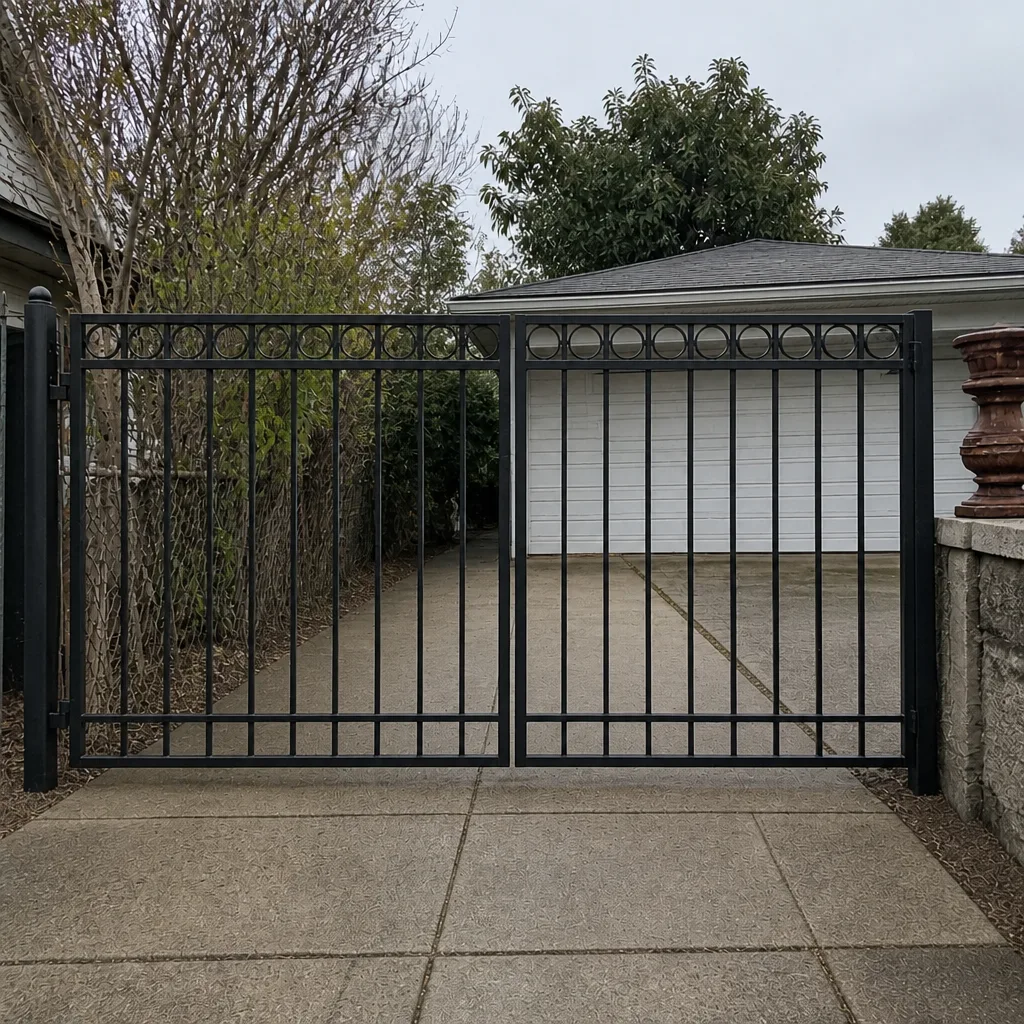
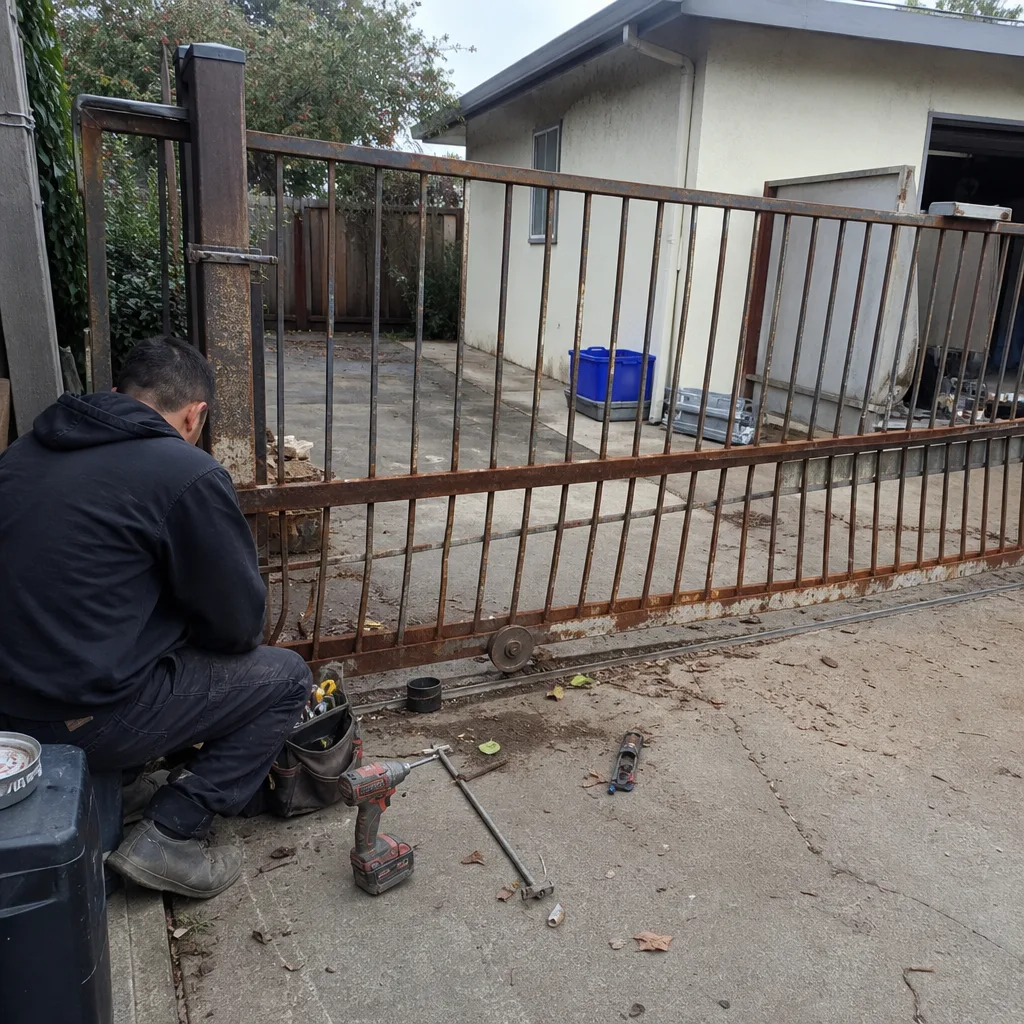
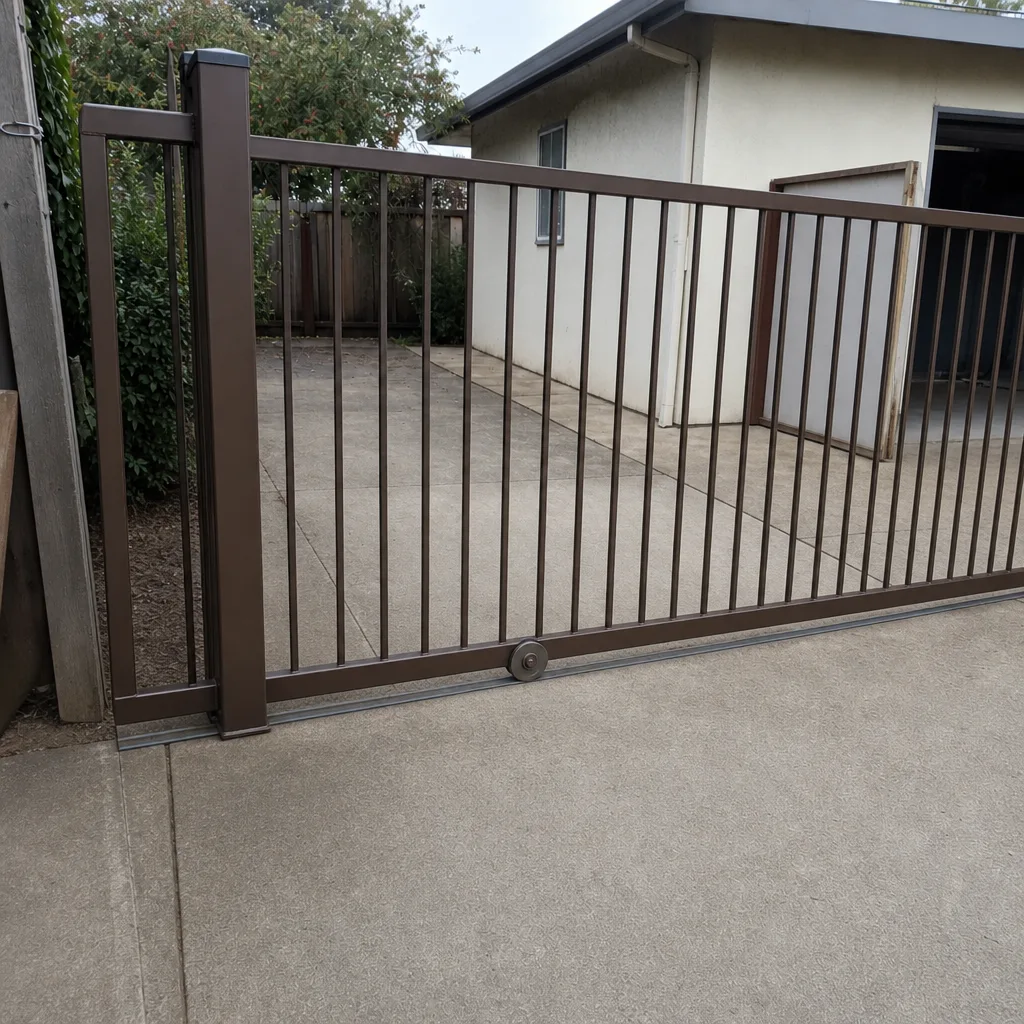
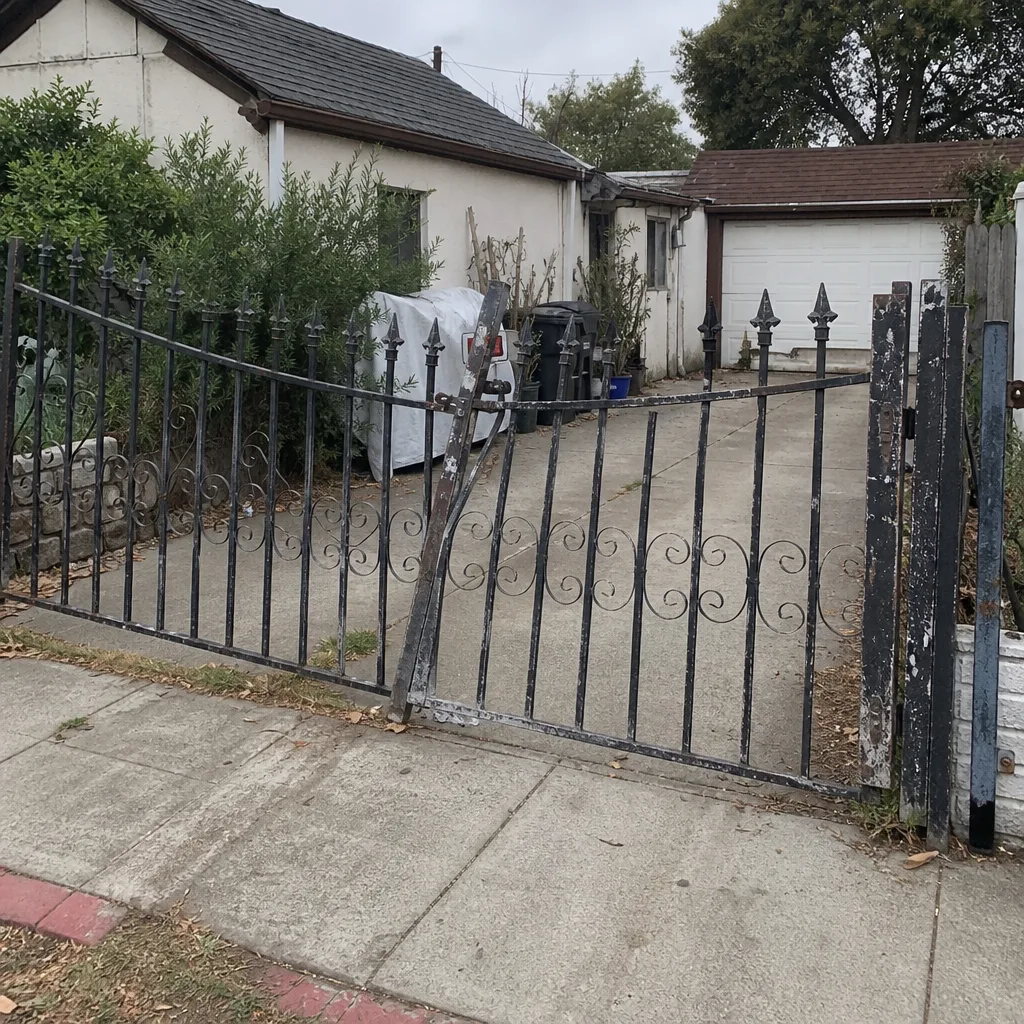
See the difference
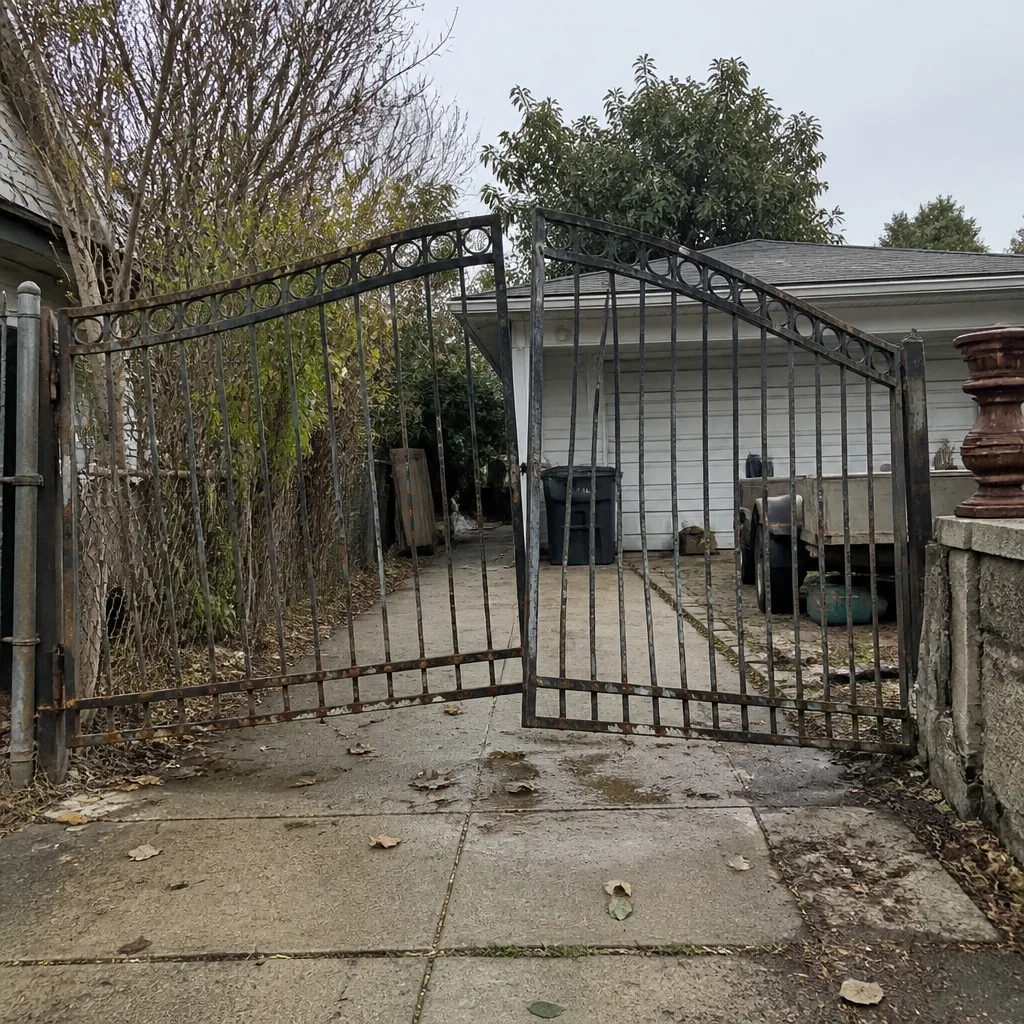 Before
 After
 Before
 After
 Before
 After