
Last updated November 4, 2026
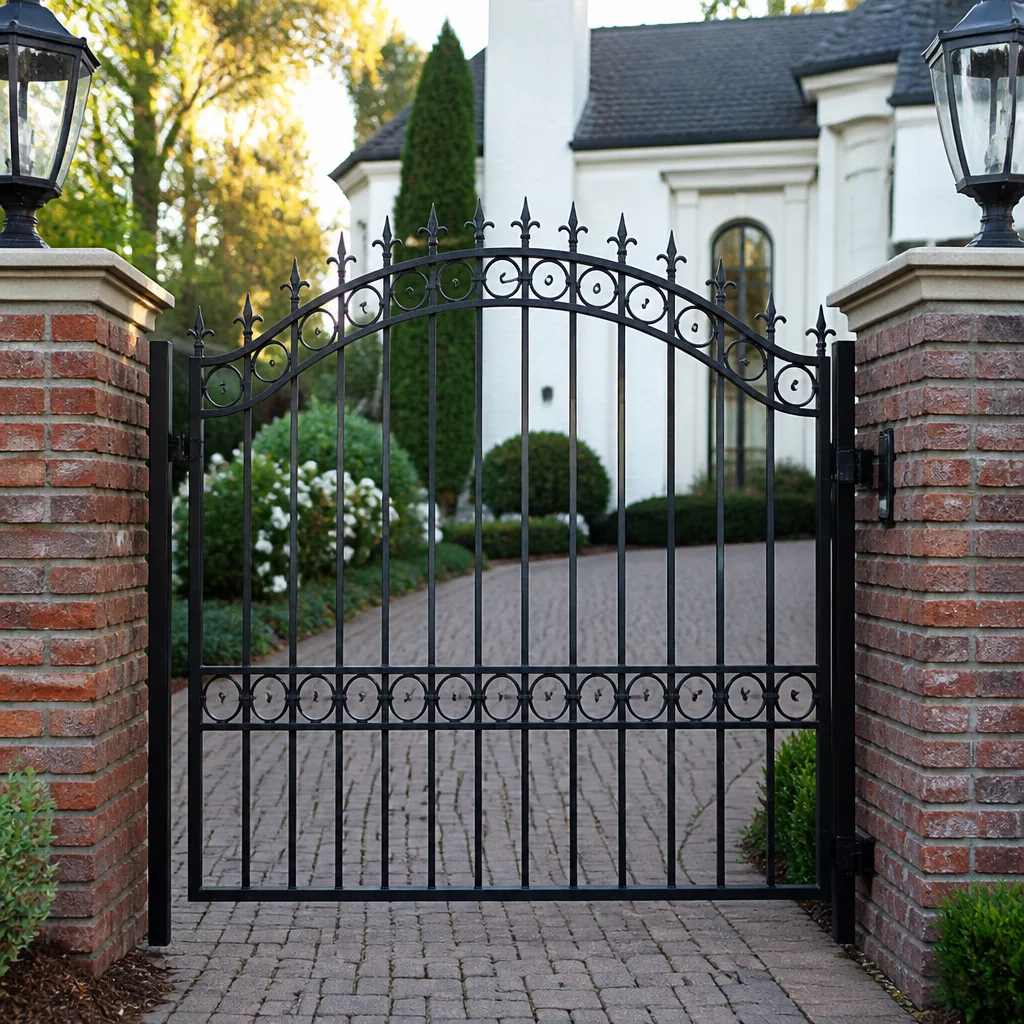 Wrought iron
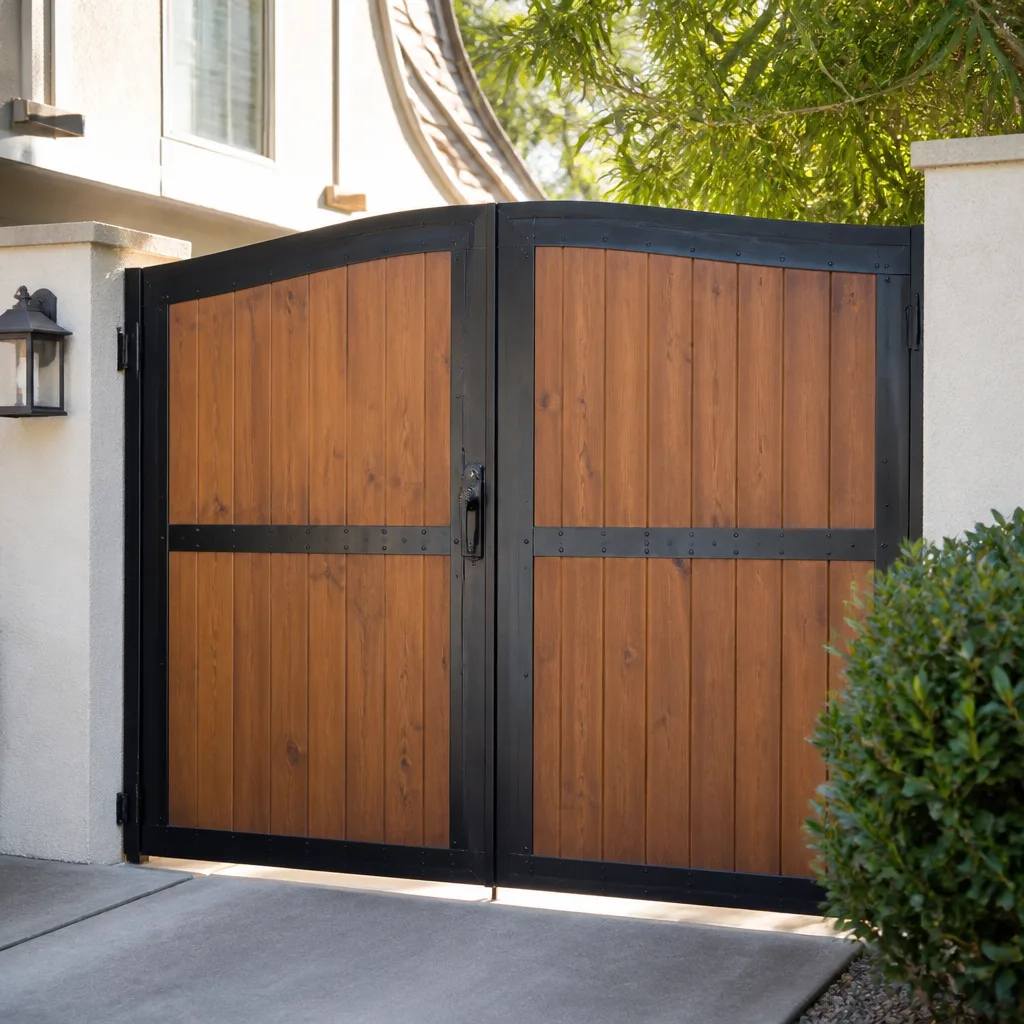 Wood & steel frame
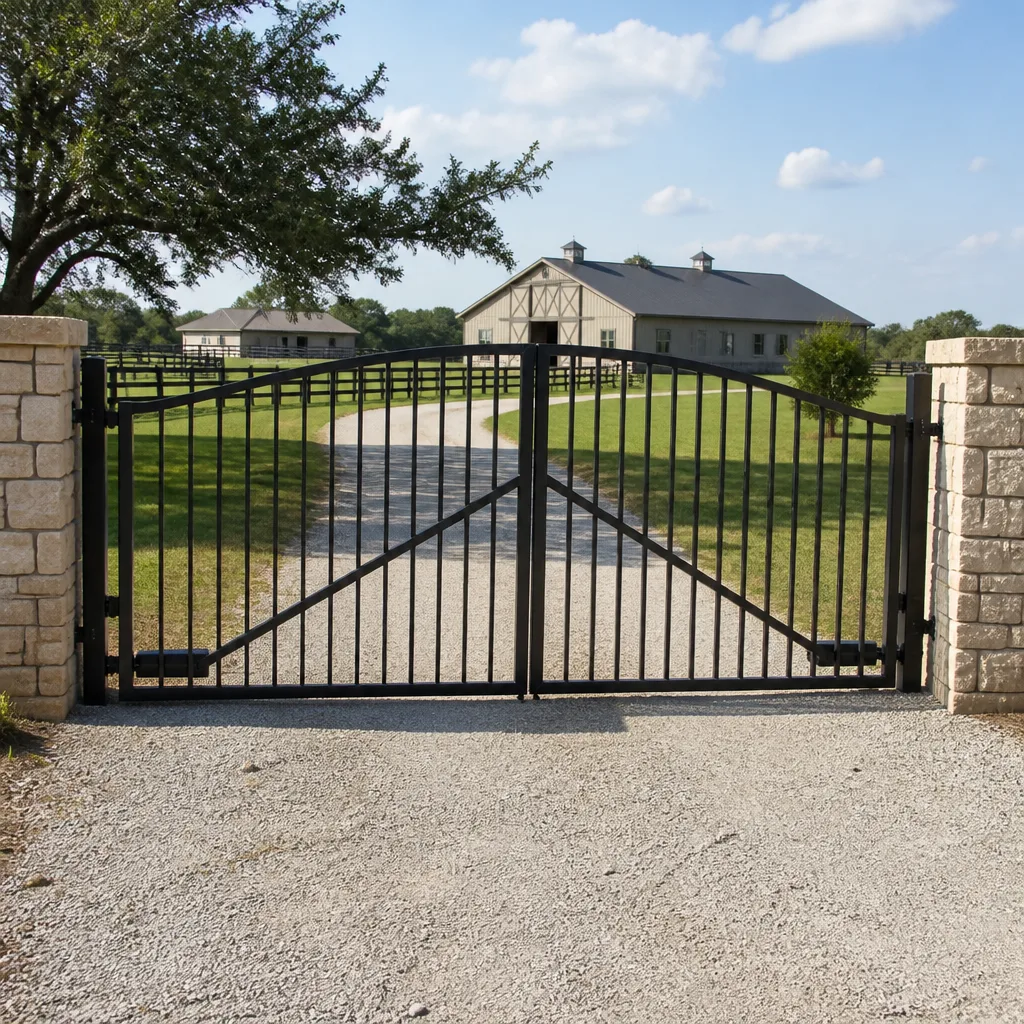 Farm & ranch
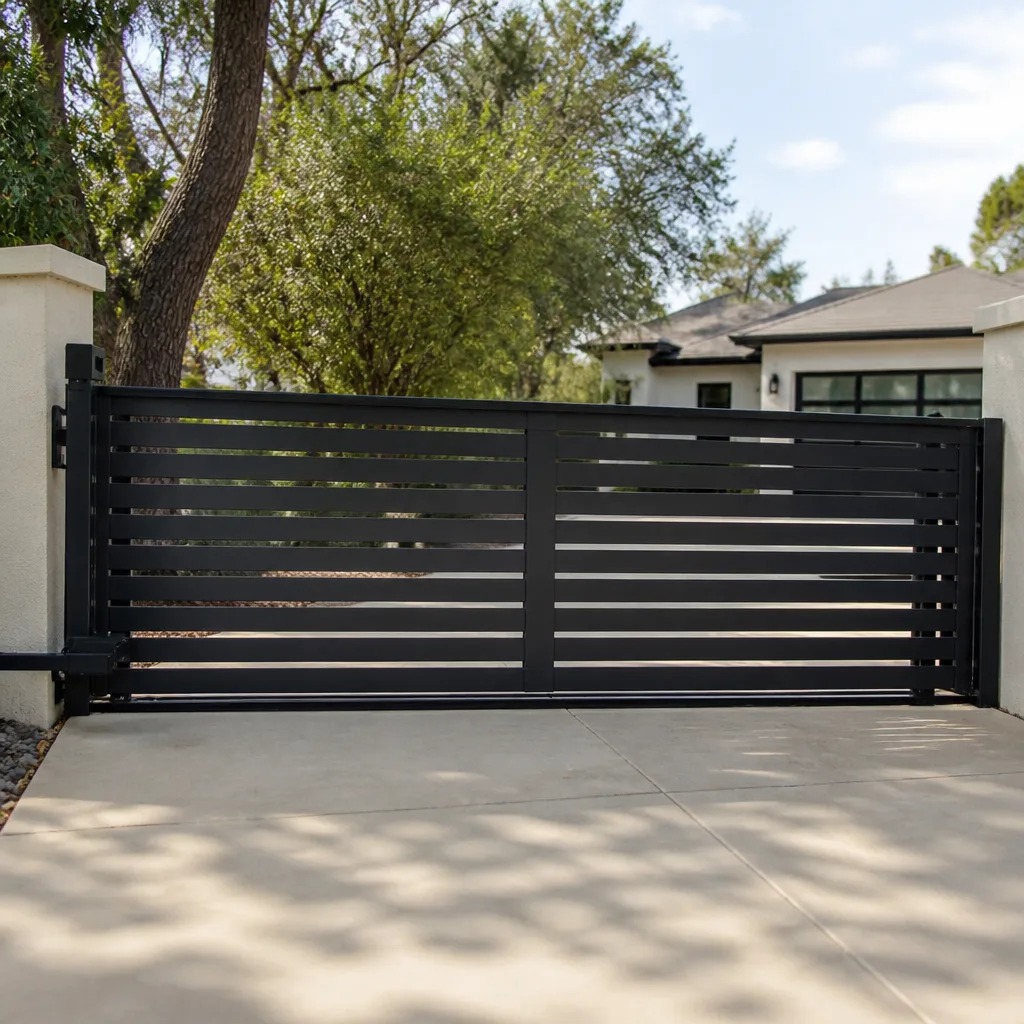 Sliding driveway gates
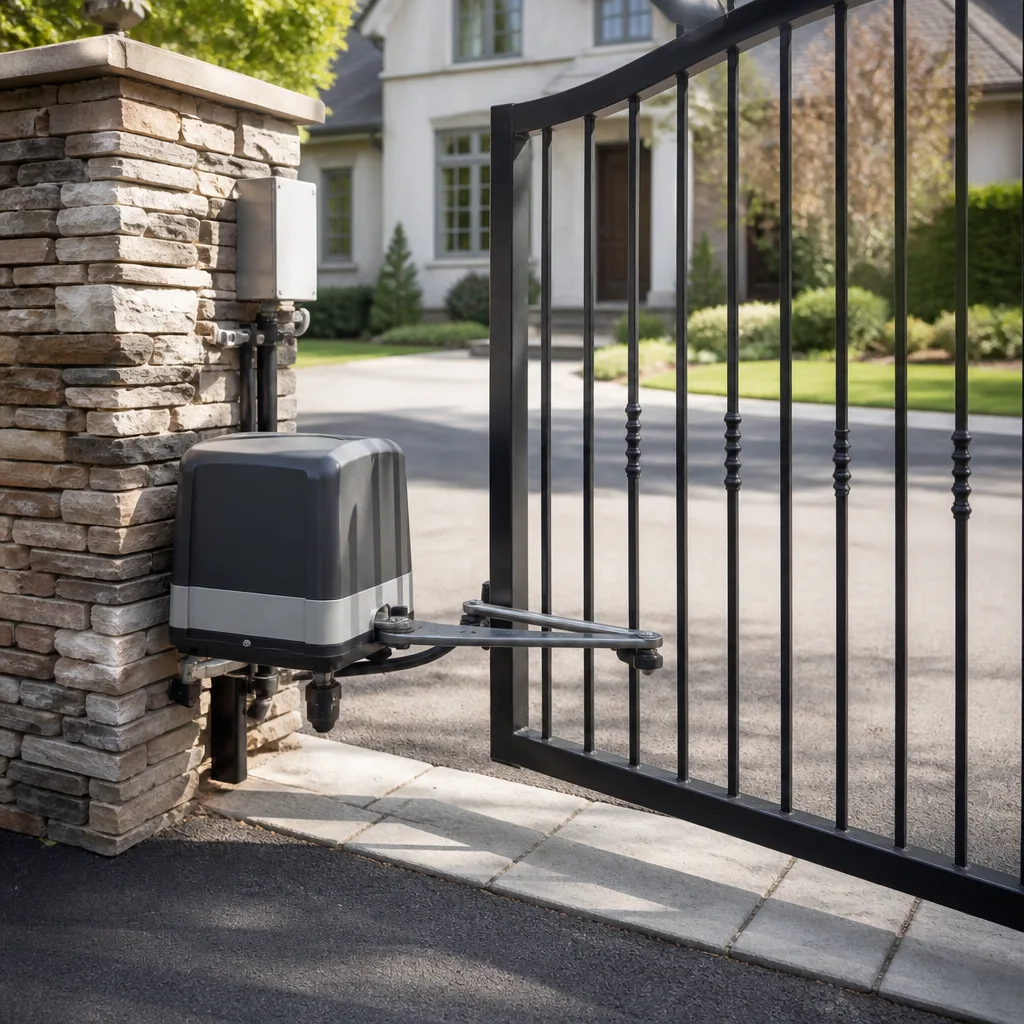 LiftMaster operators
Free on-site gate assessment - hinges, posts, and your LiftMaster or Nice gate operator checked before anything is quoted
The assessment is free and the quote is the invoice.
Get your free estimateHow to Hire a Gate Repair Contractor in San Jose: A Step-by-Step Guide
Most San Jose homeowners start their search by asking a contractor if they’re licensed and insured. That question is nearly useless on its own. A fencing contractor with a C-13 license can legally accept your gate repair job without ever having trained on a single operator brand. The question that actually separates a gate specialist from a general contractor is one almost nobody thinks to ask: “Which operator brands have you completed factory training on, and can you show me the records?” This guide walks you through a screening process built for the San Jose market, where licensed fence companies, electricians, and handymen all advertise gate repair using the same words.
Quick Answer
To hire a gate repair contractor in San Jose, verify the contractor’s specific license classification (C-13 fencing, C-10 electrical, or C-61/D28 gate specialist), confirm they have operator-specific training on your gate’s brand, and request a written estimate that names the root cause, the parts being sourced, and the labor warranty terms. Ask for proof of insurance that covers both property damage and bodily injury from automated gate operation. Need help now? Call Gate Repair Blossom Valley at (877) 358-4473 for a free estimate.
Styles & brands we work with
- Wrought iron
- Wood & steel frame
- Farm & ranch
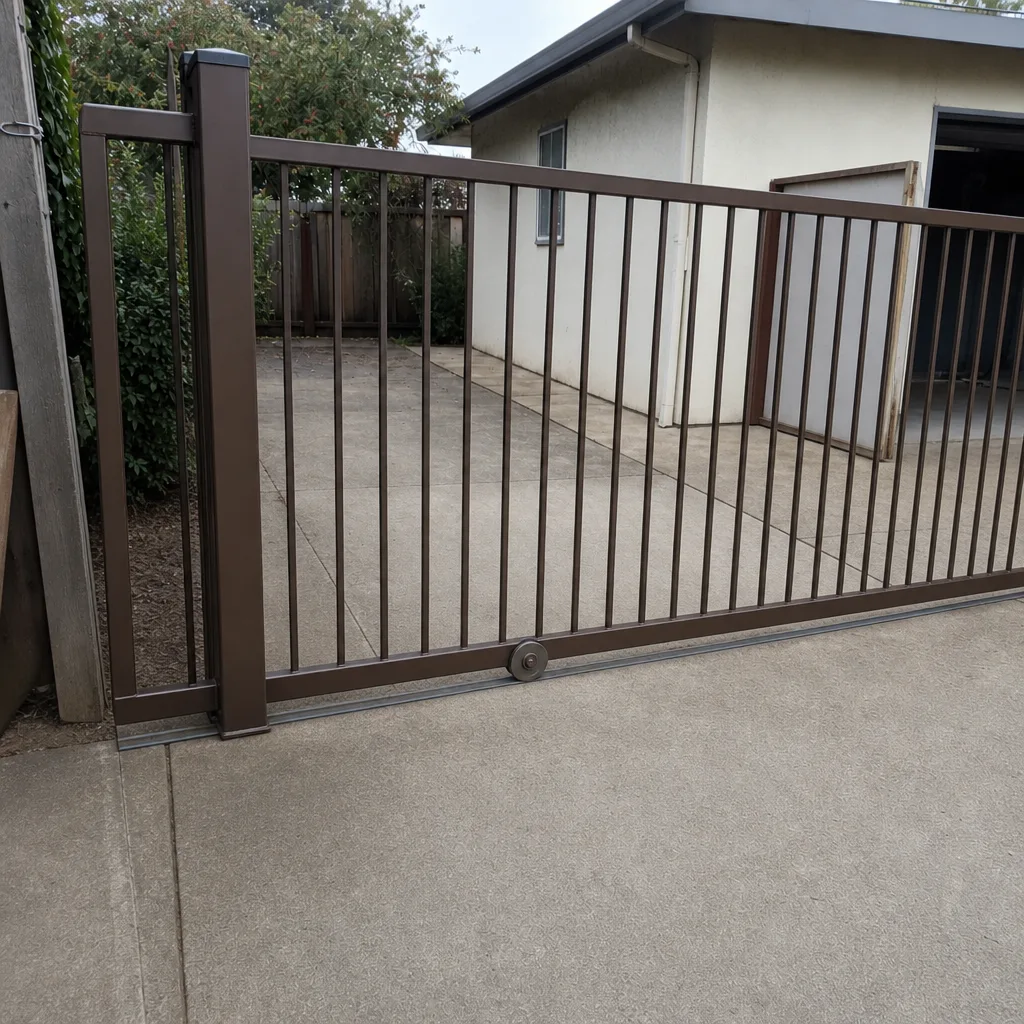
- Sliding driveway gates
- LiftMaster operators
Table of Contents
- Understanding California Gate Repair Licenses
- The Five Screening Questions That Matter
- What a Proper Written Estimate Must Include
- Insurance Gaps Specific to Automated Gates
- Red Flags in the San Jose Gate Repair Market
- Why Operator Brand Training Changes the Outcome
- The Step-by-Step Hiring Process
- Common Mistakes to Avoid
Understanding California Gate Repair Licenses
California issues several contractor license classifications that can legally touch a gate. Knowing which one your contractor holds tells you what they’re actually trained to do, and what they’re not. The three most relevant to gate work in San Jose are C-13, C-10, and C-61/D28.
A C-13 license covers fencing. This is the most common license held by companies that build and repair gates as an extension of their fence work. A C-13 holder can legally install a gate, hang it, and adjust the hinges. What a C-13 does not guarantee is any training on gate operators, control boards, safety loops, or automation wiring. Many C-13 contractors do excellent mechanical gate work but sub out or decline the electrical side entirely.
A C-10 license covers electrical work. This matters because a powered gate runs on line-voltage wiring, low-voltage control circuits, and safety sensors. A C-10 electrician understands the power side, but may have no experience with the mechanical gate structure itself – the weight of the panel, the hinge wear, the track alignment.
The classification most homeowners have never heard of is C-61/D28. This is a limited specialty license for doors, gates, and activating devices. A D28 holder is specifically licensed for gate systems and their operators. When someone in San Jose advertises as a gate specialist, this is the license classification you want to see, or a combination of C-13 and C-10 experience with documented operator training.
Ask directly: “What is your license classification number?” Then verify it on the Contractors State License Board website. Do not accept “we’re licensed” as an answer. A license number takes thirty seconds to check and tells you the scope of what that contractor is legally qualified to do.
The Five Screening Questions That Matter
The difference between a trained gate technician and a general contractor shows up within five minutes of the right questions. These five are the ones we’ve found actually separate the specialists from everyone else in San Jose.
- “Which operator brands have you completed factory training on?” A gate specialist who works on electric gate repair can name the brands. If they answer with “all of them” and cannot produce training records or talk about brand-specific quirks, that’s a red flag. Operators from FAAC behave differently than operators from Linear. BFT and Viking each have their own diagnostic logic. Training matters because it changes the repair approach.
- “Walk me through how you’d diagnose a gate that opens but won’t close.” The answer tells you everything. A trained technician starts with the safety loop and photo eyes, then moves to the control board. A handyman guesses at the motor. Listen for a diagnostic sequence, not a part thrown at the problem.
- “Do you stock or source brand-specific parts, or use universal replacements?” Universal parts work on some systems and fail on others. Gate systems from different brands use different voltages, different limit logic, and different control board protocols. A contractor who only carries universal parts is not a brand specialist.
- “Have you worked on this specific brand in San Jose recently?” Local experience in San Jose matters because the housing stock, gate styles, and common automation systems here differ from other markets. A contractor who has never touched a Viking operator in San Jose is learning on your gate.
- “Will the same technician who diagnoses the problem also perform the repair?” Some companies send a salesperson or estimator first, then a different crew for the work. That handoff loses diagnostic detail. You want the person who finds the problem to also fix it.
We work on your brand. That’s the core of what gate repair means to us. When a technician arrives at a San Jose home, they should recognize the system on the gate, not ask you what kind of opener it is.
What a Proper Written Estimate Must Include
A low-quality gate repair quote in San Jose is usually one page with a dollar figure and the words “repair gate.” That tells you nothing about what the contractor actually found, what they’ll do, or what happens if the repair fails. A proper written estimate should include several specific elements, and their absence is a reason to keep looking.
First, the estimate must name the root cause. “Gate opener not working” is a symptom. “Control board failure due to a shorted safety loop at the left photo eye” is a diagnosis. If a contractor cannot tell you what is wrong before quoting a price, they have not diagnosed the problem. Diagnosed, not guessed.
Second, the estimate should disclose parts sourcing. Are the parts brand-matched OEM components, or aftermarket equivalents? Some aftermarket parts are fine. Others are not. You deserve to know before the work starts which parts are going on your gate and where they come from.
Third, look for labor warranty terms. Most gate repair failures happen within the first few months. A written estimate that does not state how long the labor is covered, or does not mention a labor warranty at all, leaves you unprotected if the repair fails in three weeks.
Fourth, the estimate should itemize labor and materials separately. A single bundled number hides whether you’re paying for a quality part or a markup on a cheap universal board.
The price is quoted and agreed before any work starts. That is non-negotiable in our book. If a San Jose contractor will not put the number in writing before touching your gate, walk away.
Free estimates are standard in this industry. Call (877) 358-4473 and we’ll come out, diagnose the system, and give you a written price. No charge for the estimate.
Insurance Gaps Specific to Automated Gates
Automated gates introduce a specific insurance coverage issue that most homeowners in San Jose never think to check. A standard handyman or general contractor policy covers basic property damage and general liability. But automated gate operation carries a unique risk: bodily injury from the gate itself. A gate that closes on a person, a vehicle, or a child involves product liability and operational liability that many standard policies explicitly exclude.
This is not a theoretical concern. Automated gate systems are heavy. A sliding gate can weigh hundreds of pounds. An improperly repaired operator can move that gate with enough force to cause serious injury. Safety loops, photo eyes, and reversing mechanisms exist specifically to prevent this. A contractor who does not understand those safety systems, or who bypasses them during a repair, creates a hazard that insurance may not cover.
Ask your contractor for a certificate of insurance that names both property damage and bodily injury coverage, and confirm that the policy covers automated gate operation specifically. Do not accept a verbal “we’re fully insured.” Request the certificate and call the insurer if you have any doubt. A specialist in electric gate repair carries coverage that reflects the actual risks of powered gate systems.
Also verify that the contractor’s workers’ compensation insurance is current. Gate repair involves heavy panels, high-tension components, and electrical work. If a worker is injured on your property and the contractor lacks workers’ comp, you can be held liable. This is a standard check for any trade, but it’s one many San Jose homeowners skip when they’re in a hurry to get the gate working again.
Red Flags in the San Jose Gate Repair Market
San Jose’s gate repair market has specific patterns that homeowners should watch for. These are not hypothetical warnings. They are recurring situations we’ve seen in Blossom Valley and across the city.
One red flag is the out-of-area contractor who appears after a storm or a power surge event. San Jose’s mild winters mean we don’t deal with freeze damage, but occasional heavy rain and wind can knock out gate sensors and control boards. When that happens, contractors from outside the area sometimes flood the local market, offer quick fixes at low prices, and then disappear when the repair fails. Hiring a local San Jose company means the contractor has a reputation to protect and a physical presence to hold accountable.
Another red flag is the “free diagnostic” that leads to an inflated repair quote. The pattern works like this: a contractor offers a free inspection, finds a catastrophic-sounding problem, and quotes a price far above market for the repair. The “free” diagnostic was never free – it was a sales call. A legitimate free estimate comes with a written diagnosis and a reasonable price, with no pressure to sign immediately.
Be cautious of any contractor who quotes a price over the phone without seeing the gate. A sliding gate has a different failure profile than a swing gate. A Viking operator fails differently than a BFT. No honest contractor can price a gate repair without inspecting the system in person.
Watch also for contractors who cannot answer basic questions about safety loops and photo eyes. These are fundamental components of every automated gate. If a contractor seems vague about them, that contractor has not been trained on gate automation.
Why Operator Brand Training Changes the Outcome
Gate operators are not interchangeable. A FAAC operator uses a different control board architecture than a Linear. BFT systems have their own limit-setting procedures and diagnostic codes. Viking operators are built for different duty cycles than residential systems from other brands. When a technician knows these differences, the repair is faster and more accurate.
From the opener to the hinge, a brand-trained technician can trace a failure across the entire system. They know which symptoms are typical for which brands. They know which parts are compatible and which are not. They know when an operator can be repaired and when replacement makes more financial sense.
This is the practical value of working with a contractor who has factory-brand depth. It reduces guesswork. It reduces return visits. It reduces the chance that a repair “fixes” one problem while leaving another one waiting to fail in a month.
Our technicians have service experience across nine name-brand gate and operator systems, including FAAC, BFT, Linear, and Viking. That breadth matters because it means we can compare how different systems behave and isolate failure points faster. It also means we’re relevant whether you have a light-duty home operator or a high-cycle commercial access system.
The Step-by-Step Hiring Process
Here is the full hiring process, step by step, so you can move through it quickly when your gate fails and you need it back in service.
- Document the symptoms. Before you call anyone, note what the gate is doing and not doing. Does it open but not close? Close but not open? Does the operator hum but the gate doesn’t move? Does the remote work intermittently? These details help the technician diagnose faster.
- Run the safety checks you can do safely. Check that nothing is blocking the photo eyes. Look for visible damage to the track, hinges, or panel. Do not open the operator housing if you’re not trained – control boards and wiring carry voltage even when the gate is off.
- Build a shortlist of contractors. Start with local San Jose companies. Ask for license classification numbers and verify them. Ask which operator brands they work on.
- Call and ask the five screening questions. Use the questions from earlier in this guide. A contractor who answers them confidently and specifically is worth booking.
- Request a written estimate. Insist on a diagnosis, parts sourcing disclosure, itemized labor and materials, and labor warranty terms. The price must be set before work begins.
- Verify insurance. Confirm property damage and bodily injury coverage for automated gate operation, plus current workers’ comp.
- Book the repair. Once you’ve chosen a contractor, get the repair scheduled and the gate back in service.
In our experience, the entire screening process takes about fifteen minutes. That’s a small investment compared to the cost of a botched repair or a gate that fails again in six weeks.
Common Mistakes to Avoid
- Hiring on price alone. The lowest quote is often from the least trained contractor. Gate repair is a diagnostic skill, not a commodity. A cheap repair that fails costs more than a proper one done once.
- Assuming a fencing license covers operators. A C-13 contractor can legally hang a gate and never have touched an operator. Ask specifically about automation training.
- Skipping the insurance check. Automated gate injuries are real. Confirm the policy covers bodily injury from gate operation before work begins.
- Accepting an estimate without a root cause. If the quote does not name the specific failure, the contractor did not diagnose the problem. They guessed.
- Hiring an out-of-area contractor after a storm event. San Jose homeowners sometimes get flooded with offers after wind or rain damages gate systems. Stick with a local company that has a San Jose reputation.
- Ignoring the safety loop and photo eye questions. Any gate contractor who cannot explain these components clearly is not trained on automated systems.
- Paying for a “free diagnostic” that turns into a high-pressure sale. Legitimate free estimates come with a written diagnosis and no pressure to sign on the spot.
See the difference
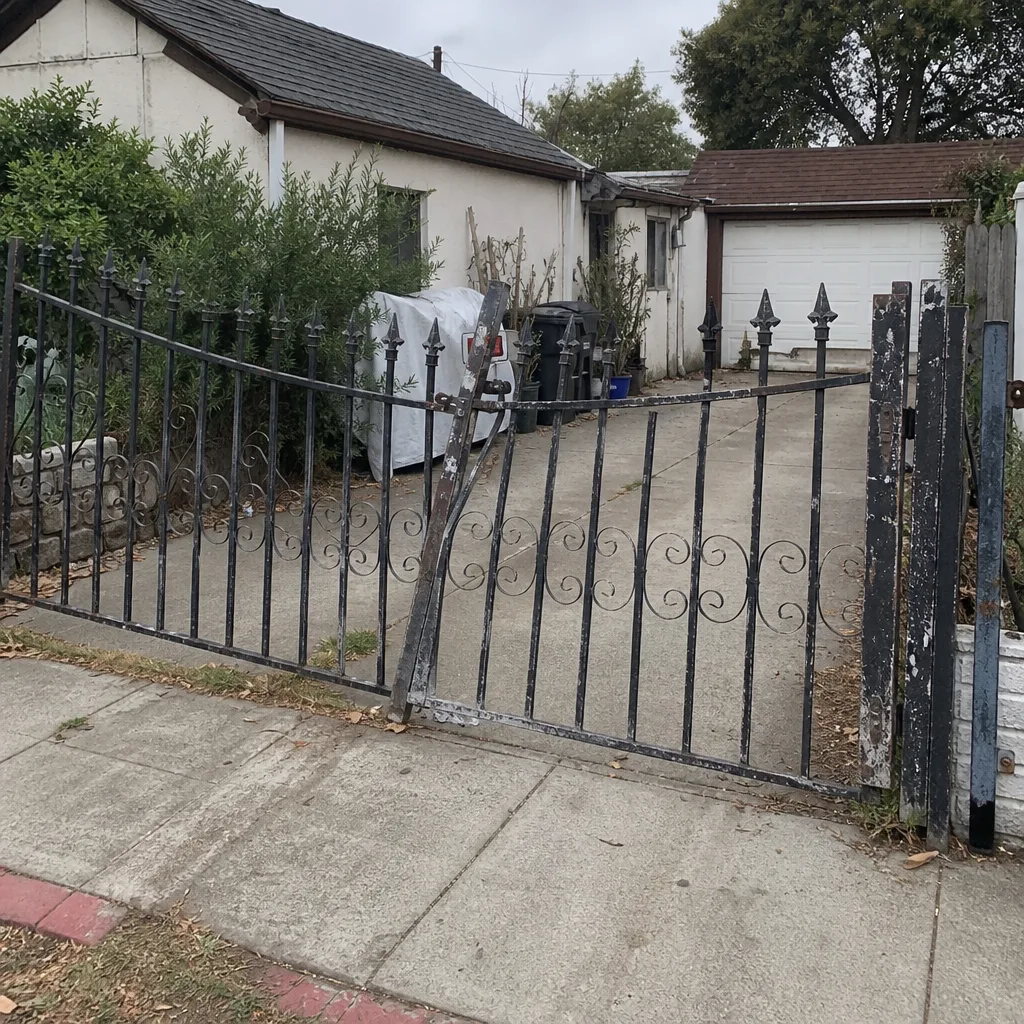
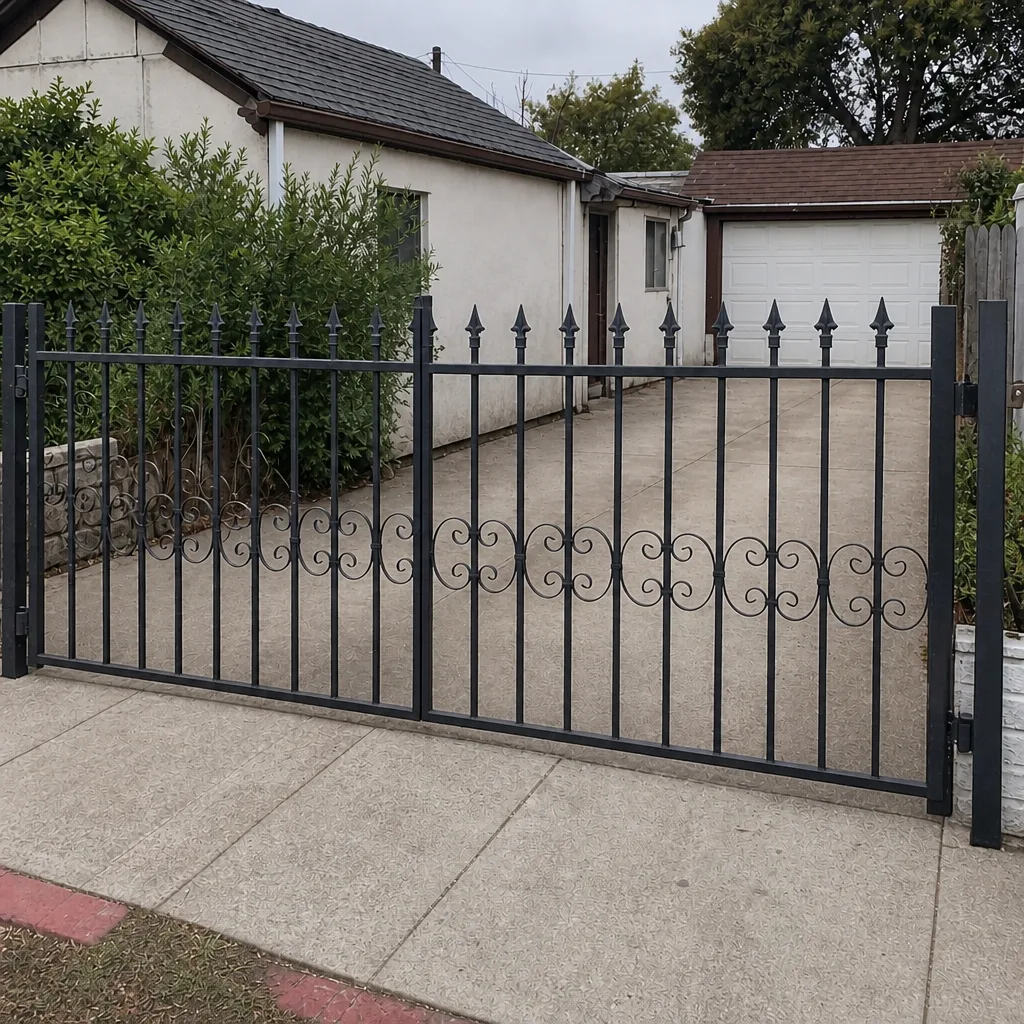
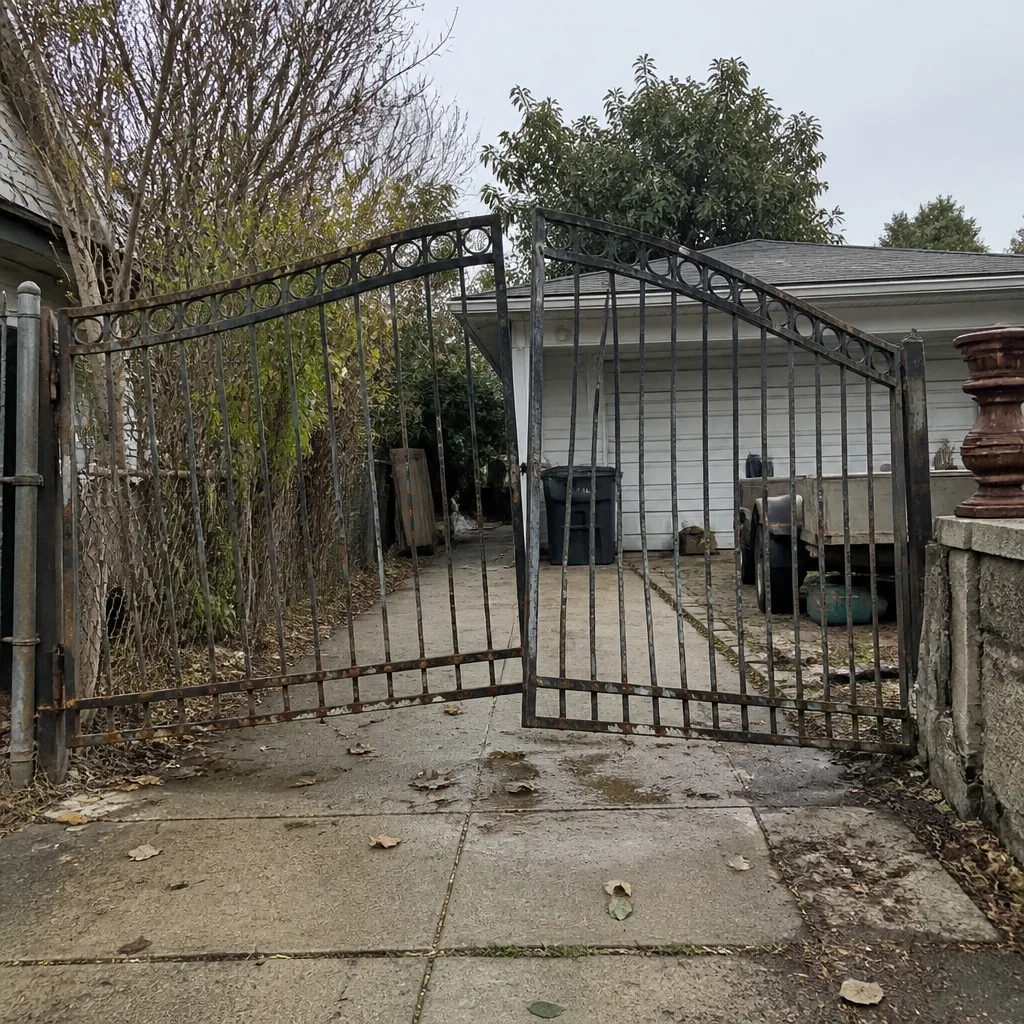 Before
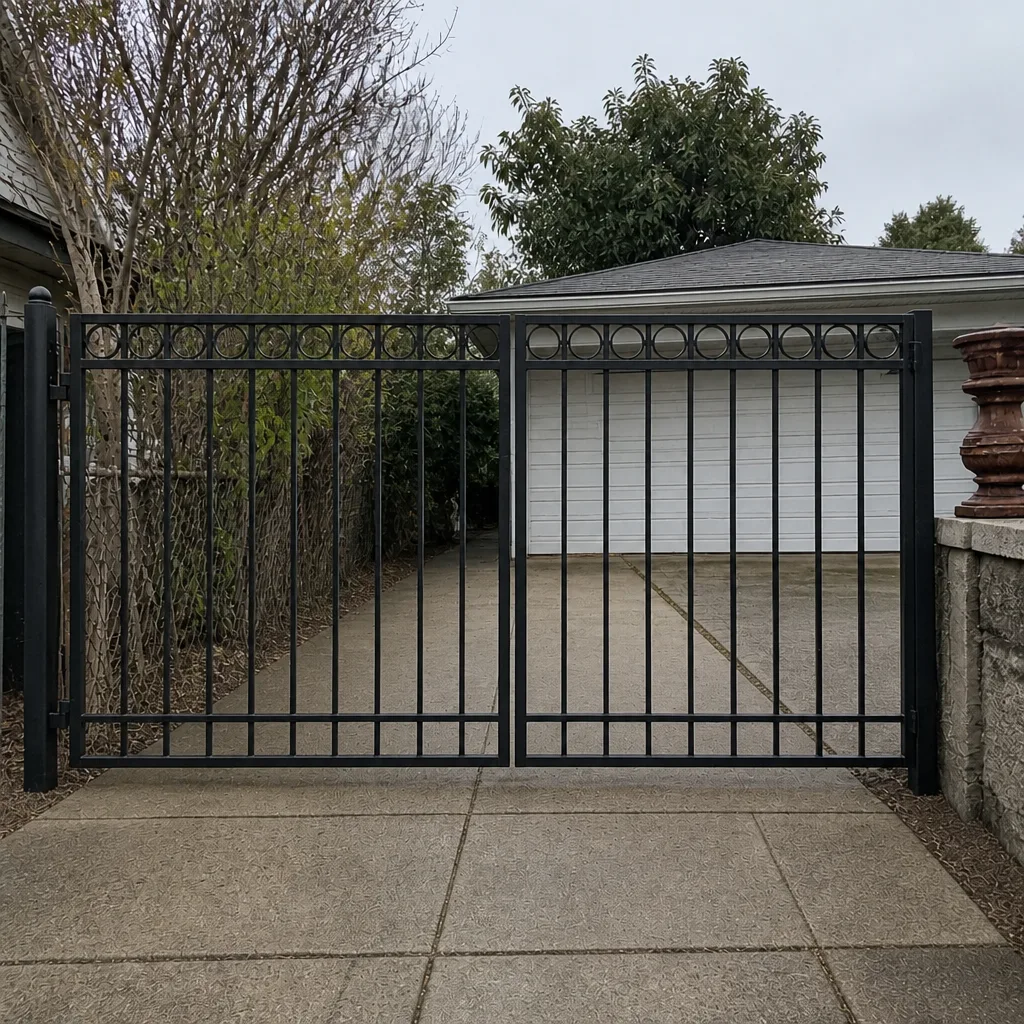 After
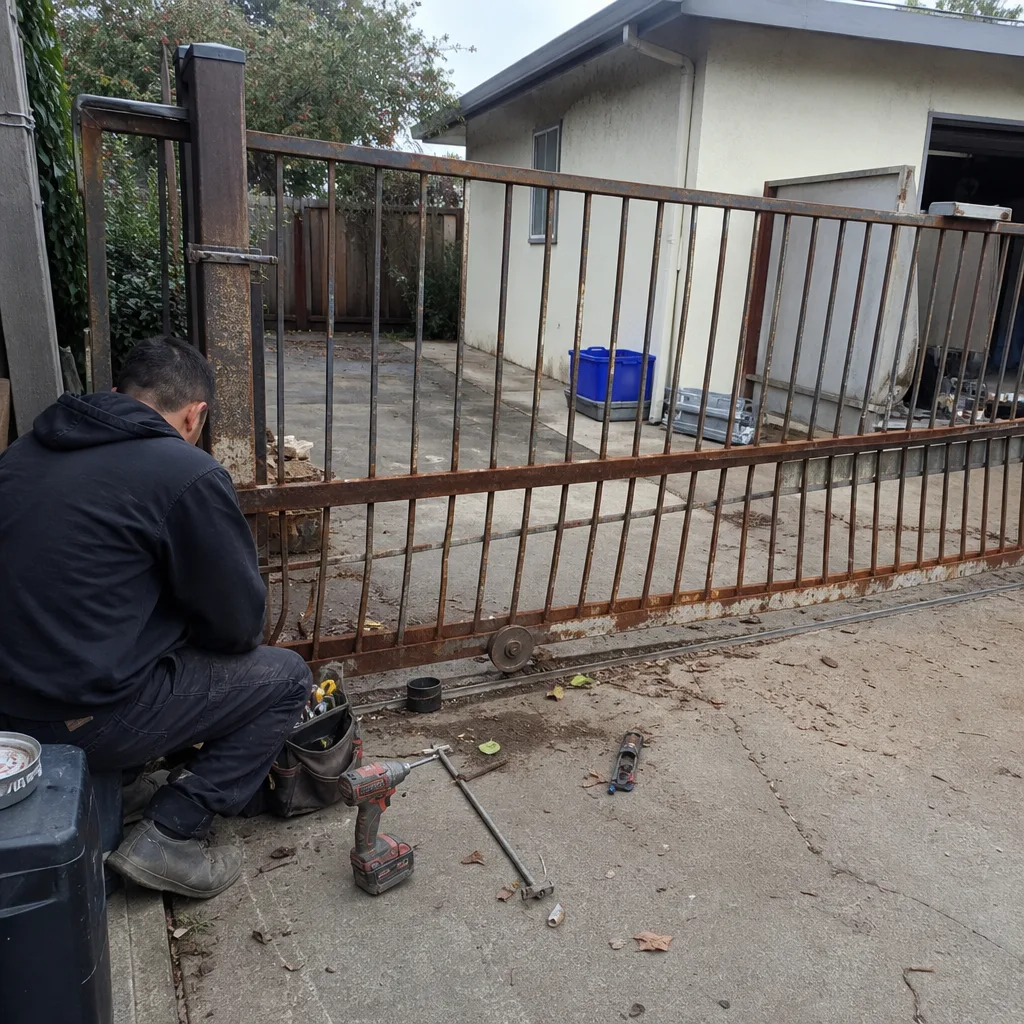 Before
 After
 Before
 After
When to Call a Professional
Call a gate professional when the operator hums but the gate doesn’t move, when the gate opens but won’t close, when the remote works intermittently, or when you see exposed wiring or a damaged panel. These are not DIY repairs. Gate panels are heavy, operators carry voltage, and a misaligned sliding gate can come off its track. Attempting a repair without training risks injury and often makes the original problem worse.
Gate Repair Blossom Valley offers free estimates in San Jose. Call (877) 358-4473. We answer 24/7. Fast dispatch from 7am to 7pm, Sunday through Friday. The price is quoted and agreed before any work starts.
Frequently Asked Questions
Gate repair in California typically falls under a C-13 fencing license, a C-10 electrical license, or a C-61/D28 limited specialty license for doors, gates, and activating devices. The D28 classification is the one most specific to gate systems and their operators. Ask your contractor for their license number and verify it on the Contractors State License Board website.
Gate repair pricing in San Jose varies by the system, the failure, and the parts required. Control board replacements cost more than sensor alignments. Heavier commercial gates cost more than light-duty residential openers. A proper estimate requires an on-site diagnosis. Call (877) 358-4473 for a free estimate and a written price before any work begins.
Yes, same-day repair is available. We answer 24/7. Fast dispatch from 7am to 7pm, Sunday through Friday. A call outside dispatch hours is booked into the next opening. Call (877) 358-4473.
We work across nine name-brand gate and operator systems, including FAAC, BFT, Linear, and Viking. Our technicians have brand-specific training and can diagnose your system without guessing. If your operator brand is not one of the nine we service, tell us what it is and we’ll confirm whether we can help.
A proper gate repair estimate names the root cause of the failure, discloses the parts being sourced (brand-matched or aftermarket), itemizes labor and materials, and states the labor warranty terms. If an estimate in San Jose does not include these elements, ask for them or find another contractor.
Homeowners insurance sometimes covers gate damage from a covered peril like a vehicle impact or a storm, but it typically does not cover normal wear and tear or mechanical failure. Check your policy. We can work with your insurer and provide documentation for a claim. Call (877) 358-4473 to discuss your situation.
The Bottom Line
Hiring a gate repair contractor in San Jose comes down to license verification, operator brand training, written estimates, and insurance coverage that matches the actual risks of automated gates. Ask the five screening questions. Demand a diagnosis before a price. Verify the license classification. Check the insurance certificate. A fifteen-minute screening saves you from a botched repair, a gate that fails again, or a liability exposure you never saw coming. When your gate fails and you need it back in service, call (877) 358-4473. We answer 24/7. Fast dispatch from 7am to 7pm, Sunday through Friday.
Written by the team at Gate Repair Blossom Valley, serving San Jose since 2015.