
Last updated November 4, 2026
 Wrought iron
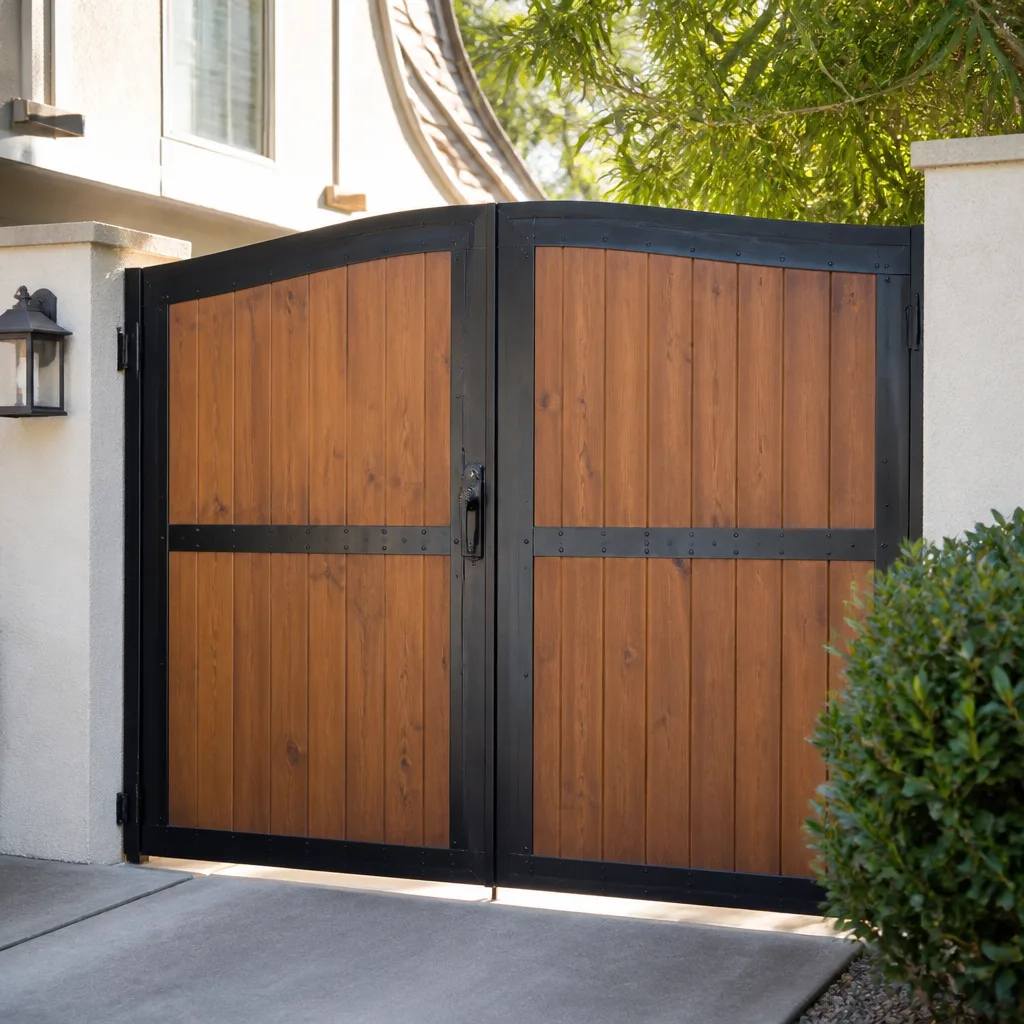 Wood & steel frame
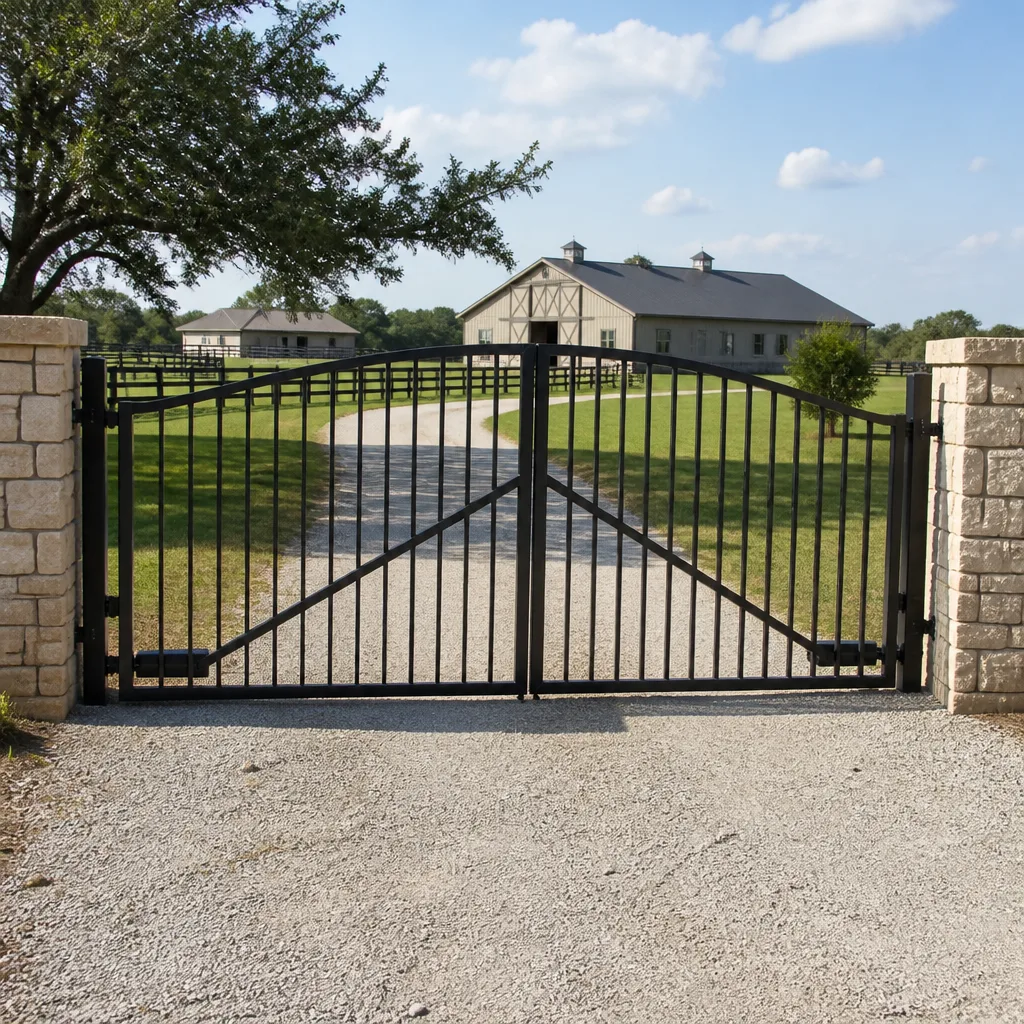 Farm & ranch
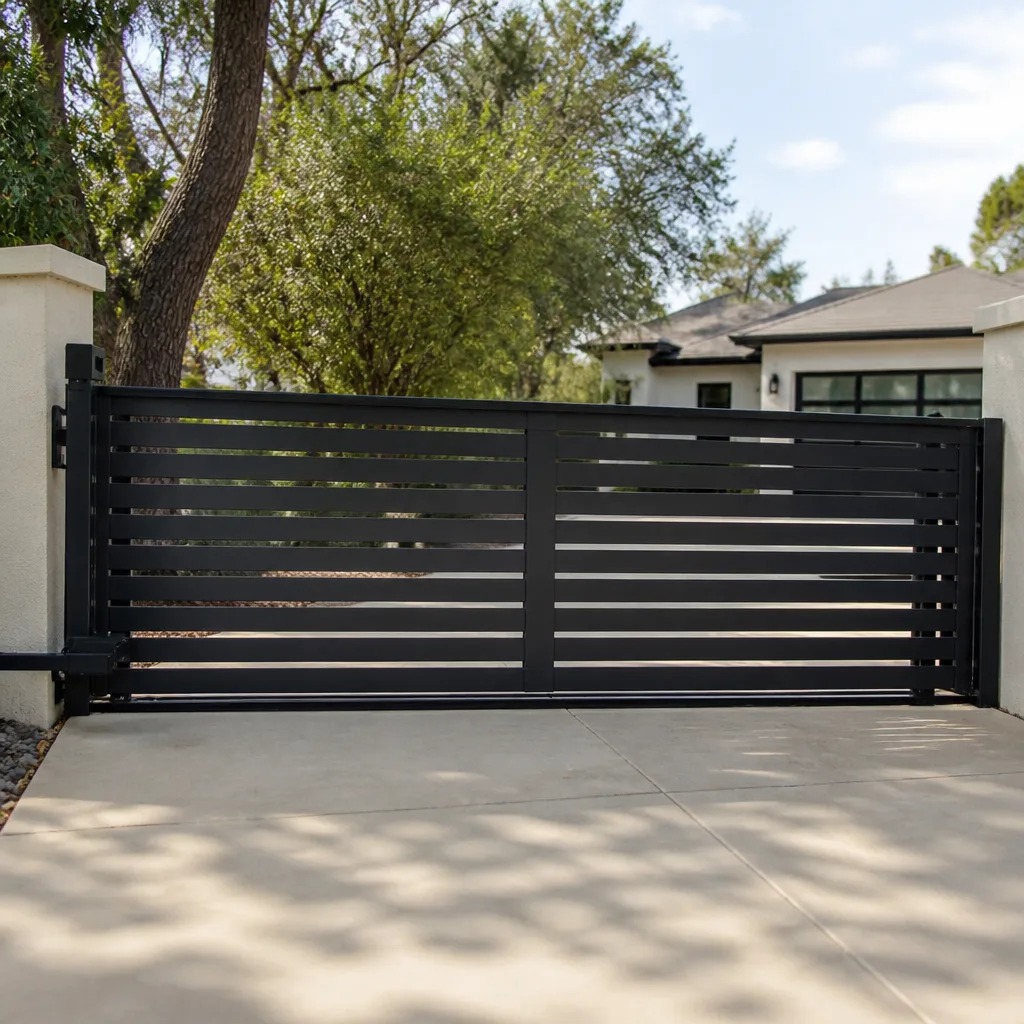 Sliding driveway gates
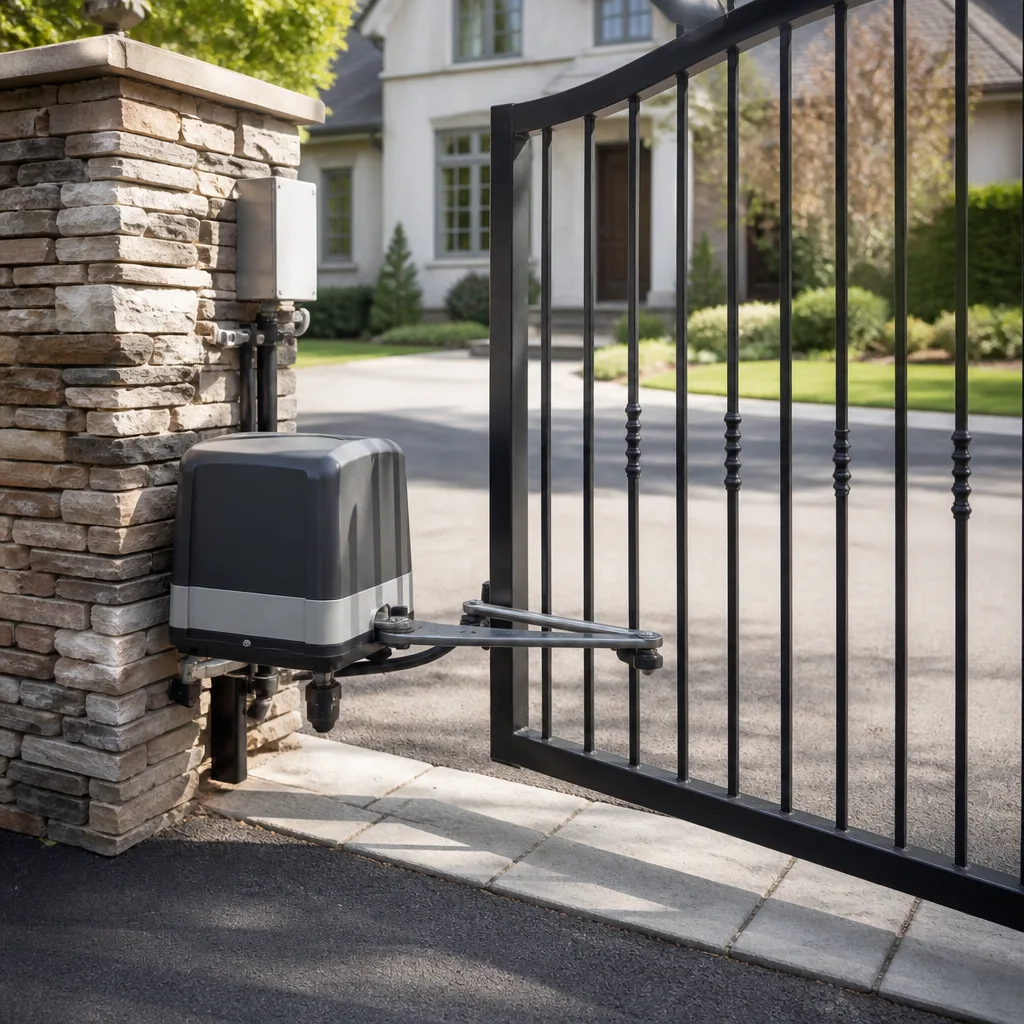 LiftMaster operators
Free on-site gate assessment - hinges, posts, and your LiftMaster or Nice gate operator checked before anything is quoted
The assessment is free and the quote is the invoice.
Get your free estimateGate Repair Warning Signs: A San Jose Homeowner’s Reference Guide
A gate that hesitates for two seconds before moving is not “warming up.” That pause is the operator drawing repeated start attempts because the capacitor that provides startup torque is failing. Left alone, it burns out the motor within weeks. This guide maps what you see and hear at the gate to what is actually failing underneath, so you can decide whether to schedule a repair or shut the system down right now. Most San Jose gates give you weeks of warning before they quit. The trick is knowing which warnings are urgent and which ones can wait a few days.
Quick Answer
Gate repair warning signs fall into three categories: unusual sounds (grinding, clicking, humming with no movement), movement problems (slow travel, jerky motion, stopping partway), and control failures (keypad works but remote doesn’t, or the gate ignores both). A humming sound that produces no movement is the most urgent mechanical warning and means the operator is drawing power while the gate is stuck. Call (877) 358-4473 for a free estimate when you notice any of these signs. We answer 24/7. Fast dispatch from 7am to 7pm, Sunday through Friday.
Styles & brands we work with
- Wrought iron
- Wood & steel frame
- Farm & ranch
- Sliding driveway gates
- LiftMaster operators
Table of Contents
- The Symptom-to-Cause Matrix
- Operator Warning Signs vs. Structural Warning Signs
- Urgent Signs vs. Scheduled Repair Signs
- San Jose-Specific Structural Warnings
- How to Document Gate Behavior Before Calling
- Entrapment Safety and Electrical Warnings
- Common Mistakes to Avoid
- When to Call a Professional
The Symptom-to-Cause Matrix
Most gate problems announce themselves through one of three channels: sound, motion, or control behavior. Here is what each observation typically points to, based on the systems we diagnose across San Jose every week.
What You Hear
- Grinding or scraping during travel. The gate’s weight is no longer riding on its rollers correctly. On a slide gate, the rollers are worn or the track has debris in it. On a swing gate, a hinge is sagging and the gate leaf is dragging on the ground or the post. This gets worse every cycle because metal-on-metal contact accelerates wear.
- Clicking with no movement. This is almost always electrical. The control board is sending a signal to the operator, but the operator is not responding. It could be a failed capacitor, a blown fuse on the board, or a limit switch that is stuck open. On Mighty Mule and Ghost Controls residential operators, clicking with no movement is frequently a board-level issue rather than a motor failure.
- Humming with no movement. This is the dangerous one. The motor is receiving power and trying to turn, but something is preventing it. That something could be a seized gearbox, a jammed chain, or a gate that has come off its track and wedged against the post. The motor is drawing full current and building heat. Shut the system off at the breaker if you hear this.
- Squealing during startup or travel. Belt-driven operators, like many FAAC units, squeal when the belt is loose or glazed. It can also be a bearing going dry in the operator housing. The sound will get worse as the bearing wears, and if the bearing seizes, you get the humming-with-no-movement scenario.
What You See
- Slow travel, same as always otherwise. The operator’s capacitor is losing its ability to deliver the startup voltage spike. The motor still runs, but it takes longer to get the gate moving. This is common on LiftMaster and Elite operators that are 7 to 12 years old in San Jose’s climate, where mild winters mean the capacitor degrades gradually rather than failing from cold.
- Jerky motion, stopping and starting. On a slide gate, this is usually a track or roller problem, not an electrical one. The gate is binding at a specific point in its travel, the operator’s obstruction sensor detects the resistance, and the board briefly reverses or pauses before pushing again.
- Gate stops partway and reverses. The operator’s entrapment protection is doing exactly what it should. It senses resistance above a set threshold and reverses. The question is why the resistance is there: a bent track, a failing wheel, debris, or a warped gate leaf. This is a structural problem disguised as an electrical one.
- Partial travel, then nothing. The limit switch is out of adjustment or failing. Limit switches tell the operator where the gate is in its cycle. When one fails, the board no longer knows the gate’s position and may stop it short of fully open or closed.
What Does and Doesn’t Respond
- Remote works but keypad doesn’t (or vice versa). The operator and control board are fine. The problem is in the dead input device: a keypad with corroded contacts, a receiver that has lost its programming, or a remote with a dead battery. This is a simple, low-cost fix that should not require replacing the operator.
- Neither remote nor keypad works. This points to the receiver, the control board, or the power supply to the board. On Viking and DoorKing units, a failed receiver is common and inexpensive to replace. On residential brands like Ghost Controls, the receiver is often integrated into the board, which makes it a board replacement.
- Gate works manually but not automatically. The mechanical system is sound. The failure is somewhere in the automation chain: the operator, the board, the wiring, or the safety loop. This is where electric gate repair is a different job from mechanical gate work, because it requires working through the wiring diagram and testing components in sequence rather than looking for a broken part.
Operator Warning Signs vs. Structural Warning Signs
Homeowners routinely conflate these two categories, and it leads to the wrong diagnosis and wasted money. The operator is the motor and control system that moves the gate. The structure is everything the gate hangs or slides on: posts, hinges, rollers, track, and the gate leaf itself.
Here is the practical distinction that matters. If you can push the gate open and closed by hand, the structure is probably sound and the problem is in the operator or controls. If the gate is difficult or impossible to move manually, the operator might be fine and fighting against a structural problem. Many operators get replaced in San Jose when the real issue is a post that shifted on clay soil and threw the gate out of alignment.
Operator-Only Warning Signs
- Clicking, humming, or buzzing from the operator housing
- Gate moves fine when released but won’t move under power
- Remote or keypad works intermittently
- Gate opens but won’t close automatically
- Operator runs but the gate doesn’t move (sheared pin or coupling)
Structural-Only Warning Signs
- Gate scrapes the ground at the free end
- Post leans visibly, even a few degrees
- Gate is hard to push by hand
- Rollers make noise but the operator is quiet
- Gate sits visibly uneven in its opening
The overlap is real. A structural problem left alone becomes an operator problem, because the operator strains against increasing resistance until its motor, belt, or gearbox fails. That is why a grinding gate should be addressed before it becomes a dead operator and a bigger invoice.
Urgent Signs vs. Scheduled Repair Signs
Not every warning sign means drop everything. But some do. Here is a triage framework that matches how we advise homeowners who call us for gate repair in San Jose.
Urgent: Shut the System Down Today
- Humming with no movement. The motor is stalled and drawing full current. This destroys motors quickly. Shut off the breaker and call.
- Burning smell from the operator or control box. Something is overheating: a failing transformer, a stressed motor, a shorted board. This is a fire hazard in addition to a mechanical failure.
- Visible sparking anywhere on the operator, wiring, or keypad. Kill power and call. Electrical sparking at a gate is a serious safety issue, especially in dry San Jose summers.
- Gate reverses onto a person or pet. This means the entrapment protection has failed or been bypassed. A gate that cannot safely detect an obstruction is a code violation and an injury waiting to happen.
Scheduled: Book a Repair Within a Week
- Slow travel that is consistent, not worsening
- Grinding that hasn’t progressed to binding
- Keypad works but remote doesn’t
- Gate stops short of fully closed by a few inches
- Rust staining at welds, without visible cracking
The dividing line is simple: does the gate still do its job without smoking, sparking, or endangering anyone? If yes, you can schedule a repair on your timeline. If no, kill the power and treat it as urgent.
San Jose-Specific Structural Warnings
San Jose’s soil and seasons create specific failure patterns that differ from coastal or mountain communities. Our mild winters mean freeze-thaw cycling is not a factor here. What matters is clay-heavy soil that expands and contracts with moisture changes, and a dry season that can desiccate the ground and create movement.
Post Lean on Clay Soils
In neighborhoods across the Almaden Valley and throughout San Jose’s valley floor, the underlying soil has a high clay content. Clay absorbs water in the rainy months and shrinks in the dry months. A gate post set in a shallow concrete footing will slowly tilt as the soil around it moves. The first visible sign is a gate that no longer meets its latch cleanly, followed by a gap that grows at the top or bottom of the closed gate. This is a structural problem that requires resetting the post at proper footing depth, not just tightening the hinges.
Concrete Heaving at Post Bases
In areas with expansive soil, the concrete pad around a post base can lift or crack as the ground beneath it shifts. Look for a raised lip at the edge of the concrete footing, hairline cracks radiating from the post, or a post that has pulled slightly away from the surrounding concrete. These are early indicators that the post is moving and the gate’s alignment will degrade with every season of wet-and-dry cycling.
Rust Staining at Weld Points
Steel gates in San Jose don’t face salt air, but they do face morning fog and seasonal rain. The failure points are almost always the welds, because welding burns away the protective coating and creates microscopic crevices where moisture sits. The first sign is a thin rust-colored line running from a weld joint, often at the connection between a horizontal rail and a vertical picket. Left unaddressed, the rust penetrates the weld and the joint cracks. This is more common on older steel gates in established San Jose neighborhoods than on newer aluminum gates.
These structural warnings are distinct from operator warnings, which brings us to why so many Gate Repair Blossom Valley calls start with one symptom and end with a different root cause. A post that leans a single degree can load the operator with enough extra resistance to mimic a motor problem.
How to Document Gate Behavior Before Calling
A skilled technician can pre-diagnose a lot from good documentation. Here is how to capture what is happening so the first visit is productive rather than investigative.
- Record a video from the motor side. Stand where you can see the operator and the gate’s drive mechanism. Film a full open-and-close cycle, even if it is slow or stops. The sound and the movement pattern together tell us more than a description.
- Film the gate’s free end. For a swing gate, shoot the end farthest from the hinges. For a slide gate, shoot the leading edge where it meets the catch post. This shows sag, drag, and alignment issues.
- Photograph the post bases. Get a wide shot showing the post and the concrete or soil around it, plus a close-up of any cracks, gaps, or rust staining.
- Note what you were doing when it failed. Was the gate mid-cycle when it stopped? Did it fail after a power outage? After the sprinklers ran? After heavy rain? The timing often points to a specific cause: a power surge, water intrusion, or a component that failed under load.
- Check the manual release. If you know how to disengage the operator, do so and try pushing the gate by hand. Note whether it moves freely or binds. This one test splits structural problems from operator problems and saves a diagnostic step.
- Write down the brand name on the operator. The make and model are printed on the operator housing or control board. LiftMaster, FAAC, BFT, Linear, Viking, Ghost Controls, DoorKing, Elite, and Mighty Mule all have distinct failure patterns. Knowing the brand before we arrive means we come with the right diagnostic approach and likely parts.
This documentation does not need to be professional. A thirty-second phone video and a few photos are enough for a skilled technician to form a working theory before they leave the shop.
Entrapment Safety and Electrical Warnings
Automated gates are powerful machines that can crush a person or pet if safety systems are compromised. Two specific failures deserve special attention, because they are not just mechanical problems; they are dangerous.
Entrapment Protection Failure
Modern gate operators include an obstruction detection system: a safety loop in the ground, photo eyes across the opening, or a pressure sensor on the leading edge. When any of these fails, the gate loses its ability to reverse when something is in its path. Signs of a failing safety system include a gate that closes on a tested object without reversing, a gate that reverses for no reason, or an operator that displays a fault code. Testing entrapment protection properly requires more than standing in the way; it requires measuring the reversal force with a gauge. This is a job for a technician who works on electric gate repair, not a homeowner with a guess.
Electrical Hazards
The operator, control board, and wiring carry line voltage. Even a residential swing gate operator from Ghost Controls or Mighty Mule has live connections inside the housing. If you see exposed wiring, a cracked control box, or a keypad that has taken on water, do not open anything. Kill the circuit at the breaker and leave the troubleshooting to someone who works on gate electronics for a living. We work on your brand, whatever it is, and we approach every electrical inspection as if the last person to touch it made a mistake.
Common Mistakes to Avoid
- Replacing the operator before checking the structure. If the gate binds due to a shifted post or a failed roller, a new operator will burn out the same way the old one did. Diagnose the mechanical path first. From the opener to the hinge, we look at the whole system.
- Ignoring a new sound because the gate still works. Grinding is not a character trait; it is a part wearing. Every cycle adds more damage. A gate that still works but sounds wrong is the cheapest repair you will ever schedule.
- Assuming a dead keypad means a dead operator. The operator can be perfectly healthy while a keypad fails from water intrusion or a receiver loses programming. Do not replace a $1,200 operator for a $180 receiver.
- Oiling a gate that needs alignment. Lubricant quiets a squeaky roller, but if the squeal comes from misalignment, the oil just hides the symptom while the wear continues. Find the reason for the friction.
- Running the gate after a humming sound starts. If the motor hums and the gate doesn’t move, every second of power increases the chance of a burned-out motor. Shut it down. This is the difference between a $300 repair and an $800 replacement.
- Skipping the manual push test. Releasing the operator and pushing the gate by hand is the single most useful diagnostic a homeowner can do. It divides the problem into structural or electrical in thirty seconds.
- Repairing a gate without checking the safety devices. A gate that opens and closes but doesn’t reverse on an obstruction is not fixed. It’s dangerous. Any repair should include a check of the safety loop and photo eyes.
When to Call a Professional
Call a professional when the problem involves line voltage, entrapment safety, a stalled motor, or a post that has moved. These are not guess-and-check situations. A homeowner can document symptoms and make observations, but opening a control board or resetting a post requires tools, training, and a plan. We see too many San Jose gates with misaligned posts that were “adjusted” with shims, and control boards that were “repaired” with electrical tape. Diagnosed, not guessed, is the only approach that keeps the gate reliable.
Gate Repair Blossom Valley offers free estimates in San Jose. Call (877) 358-4473. We answer 24/7. Fast dispatch from 7am to 7pm, Sunday through Friday. Bring us your brand and your symptoms, and we will bring the rest.
See the difference
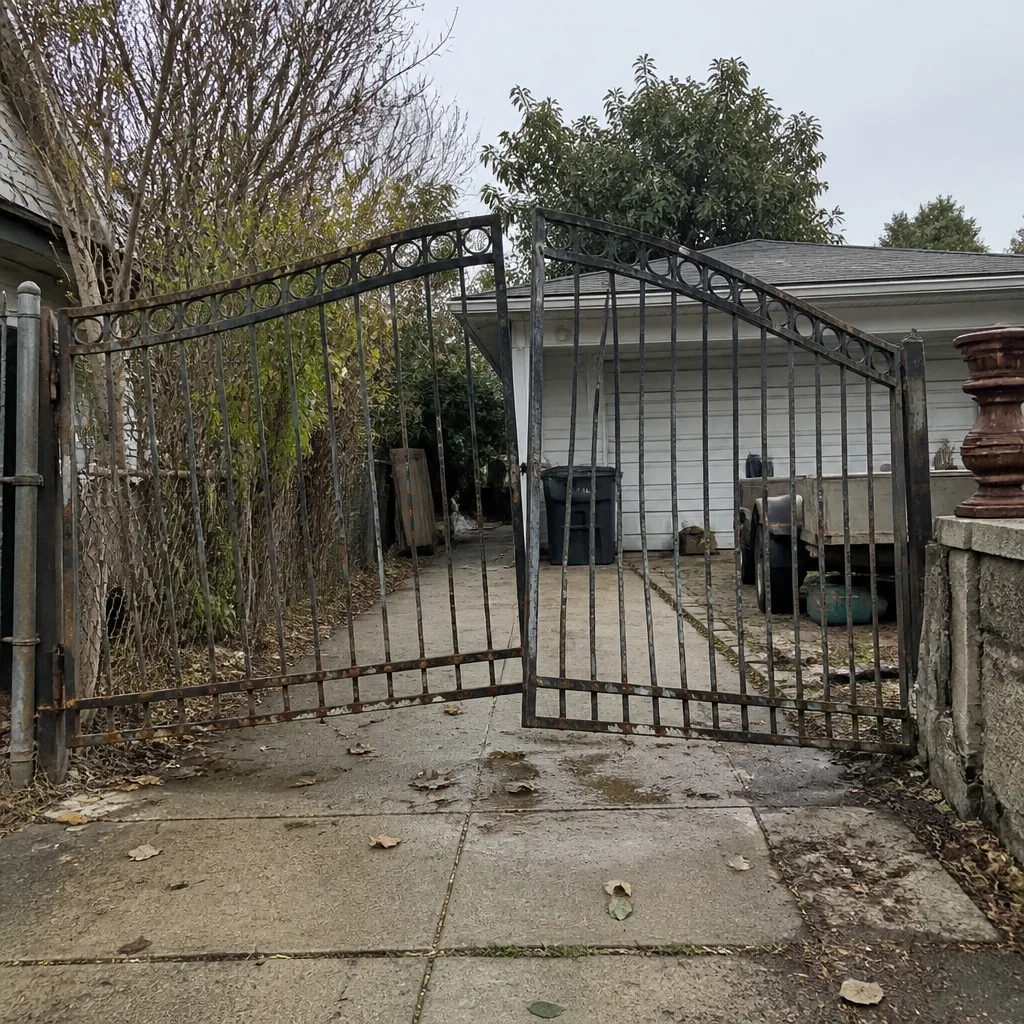 Before
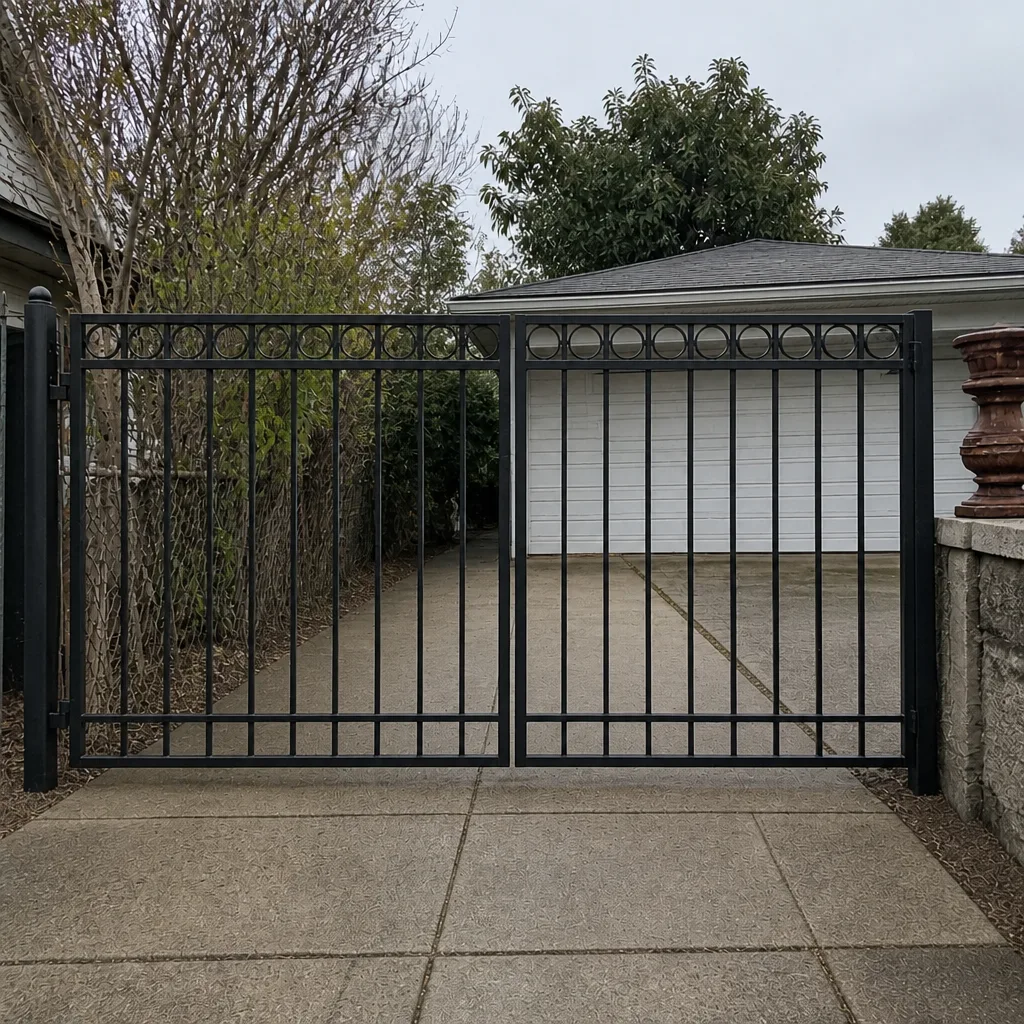 After
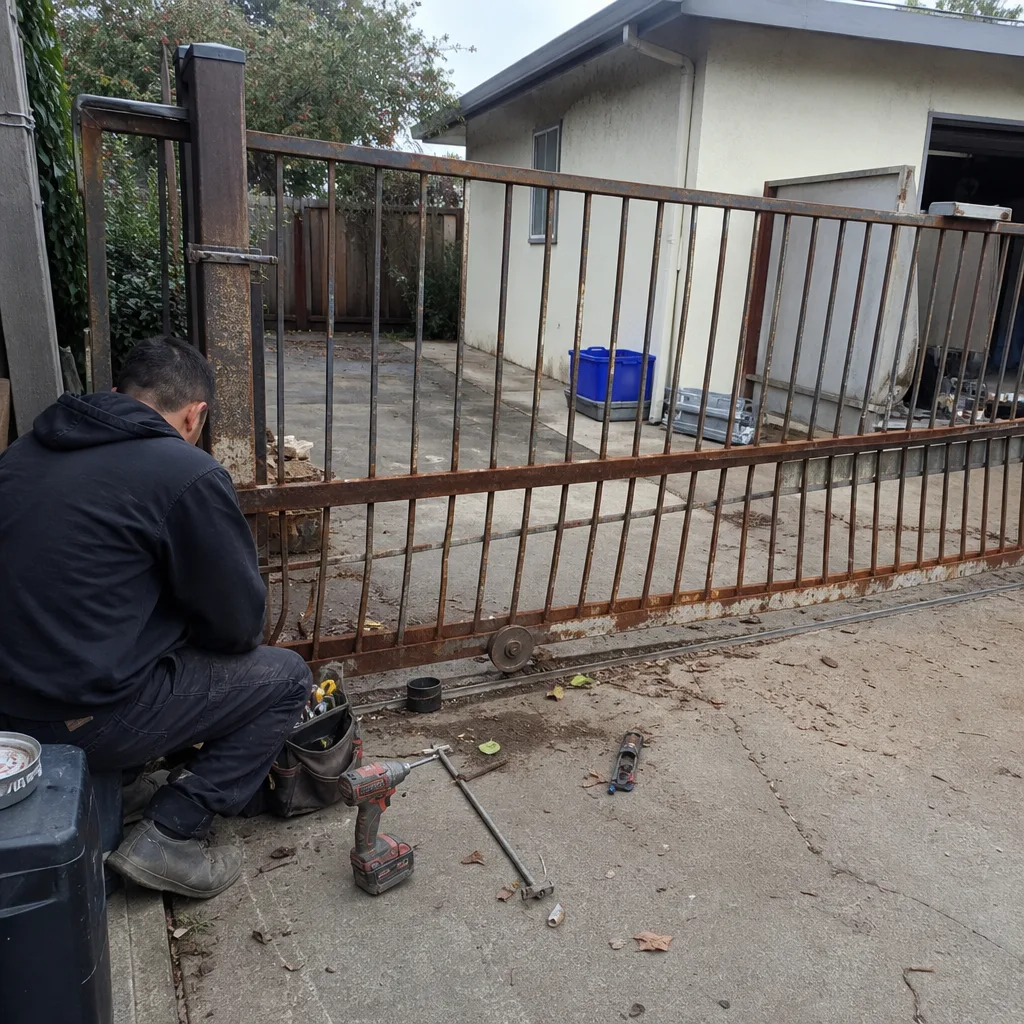 Before
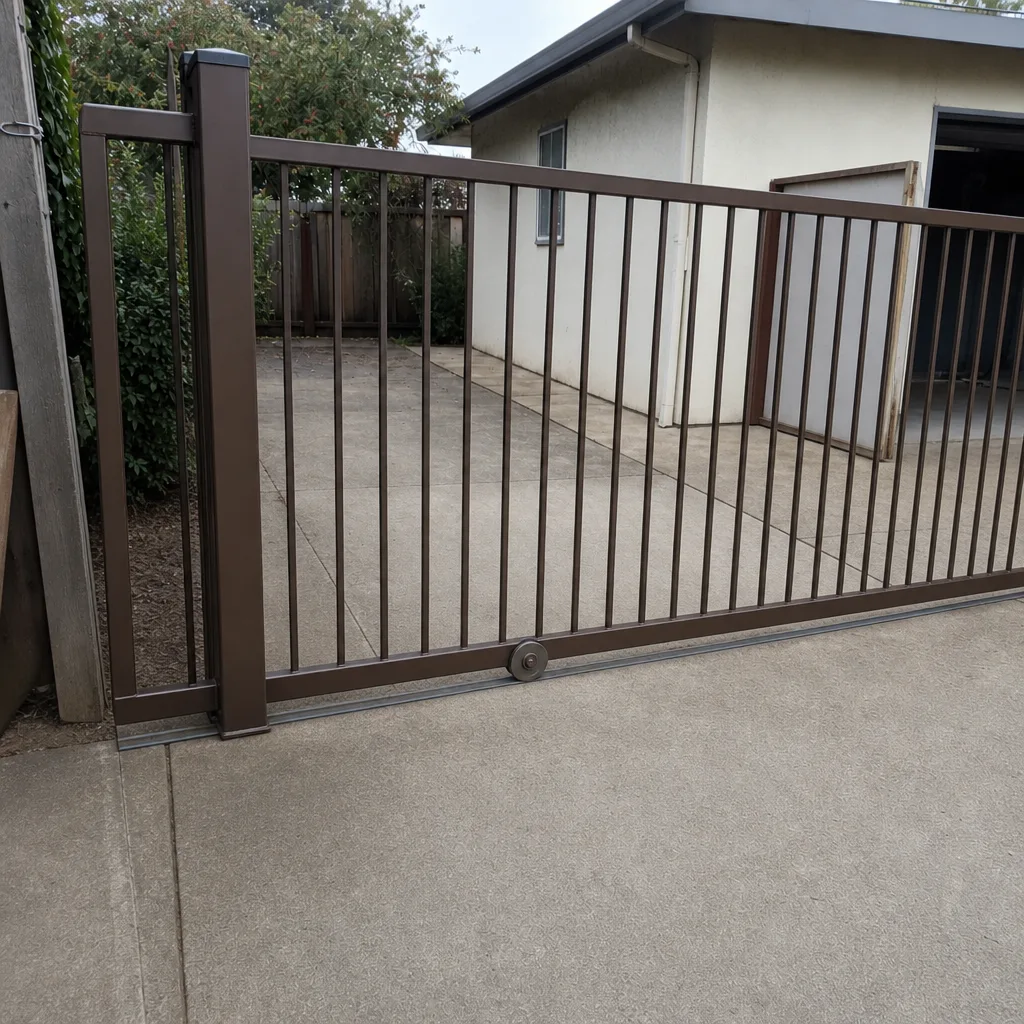 After
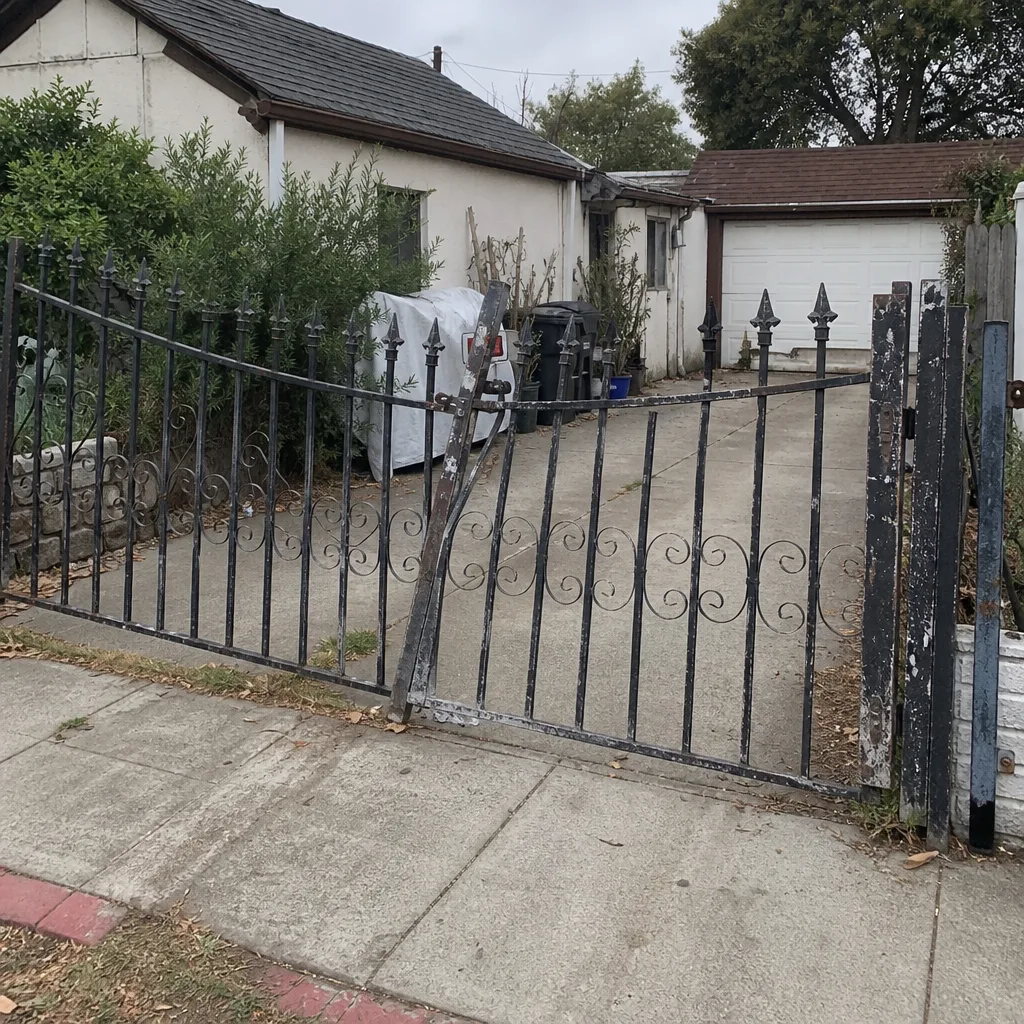 Before
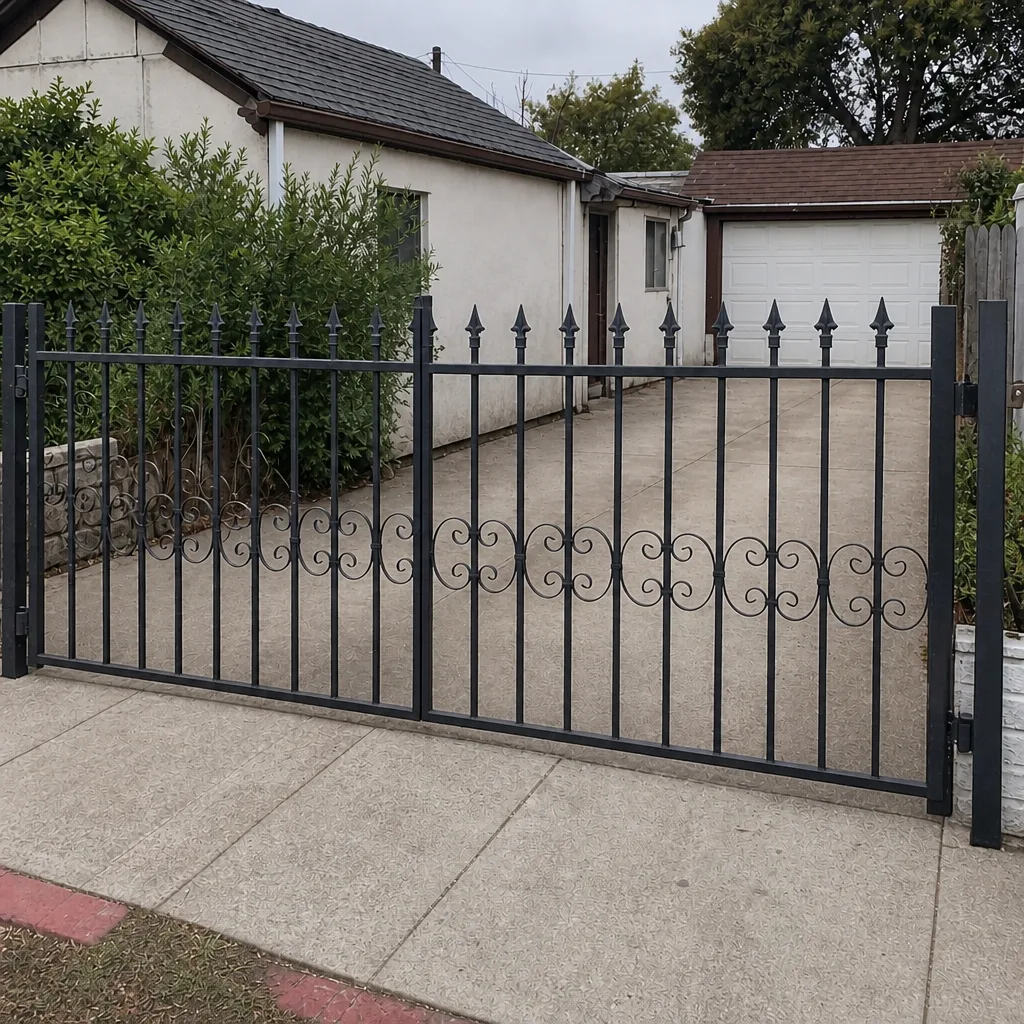 After
Frequently Asked Questions
A humming gate means the motor is receiving power but cannot turn, usually because of a seized gearbox, a jammed drive mechanism, or a failed start capacitor that cannot provide the initial torque. Shut the system off at the breaker immediately and call for repair, because the motor is drawing full current while stalled and can burn out within minutes.
Disengage the operator using the manual release and try to push the gate by hand. If it moves freely, the mechanical system is sound and the problem is electrical, in the operator or controls. If it binds or resists, the problem is mechanical, and the structure needs attention before the operator fails.
The operator is fine. The keypad has a separate issue: dead batteries in the keypad, corroded contacts, a lost code, or water intrusion. This is a low-cost repair that does not require replacing the operator or control board.
In most cases, yes. The post is extracted or braced, the footing is redone at proper depth, and the post is reset plumb. The gate itself usually survives if it hasn’t been run for months against the lean. In San Jose’s clay soil, the key is a footing deep enough to resist seasonal soil movement.
It depends on what has failed. The written estimate sets the final price, and the estimate is free. A simple receiver or keypad replacement is a fraction of an operator replacement or a post reset. We quote the price before any work starts, so there are no surprises on the invoice.
We work on LiftMaster, FAAC, BFT, Linear, Viking, Ghost Controls, DoorKing, Elite, and Mighty Mule. We are a multi-brand gate specialist serving Blossom Valley and all of San Jose, which means we know each platform’s quirks rather than applying the same generic repair logic to every gate.
The Bottom Line
Gates give warning signs, but only if you know what to look for. Sounds, movement changes, and control behavior each point to specific failures, and the difference between an urgent sign and a scheduled repair is the difference between a small fix and a major replacement. San Jose’s clay soil adds structural failure modes that homeowners in other climates don’t see, from post lean to concrete heaving. Document what you observe, test what you can safely test, and call a specialist when the problem involves electricity, entrapment, or a stalled motor. Back in service today is the goal. It starts with one phone call.
Call electric gate repair at (877) 358-4473. We answer 24/7. Fast dispatch from 7am to 7pm, Sunday through Friday. The estimate is free, and the price is quoted before any work begins.
Written by the team at Gate Repair Blossom Valley, serving San Jose since 2015.