
Last updated November 4, 2026
 Wrought iron
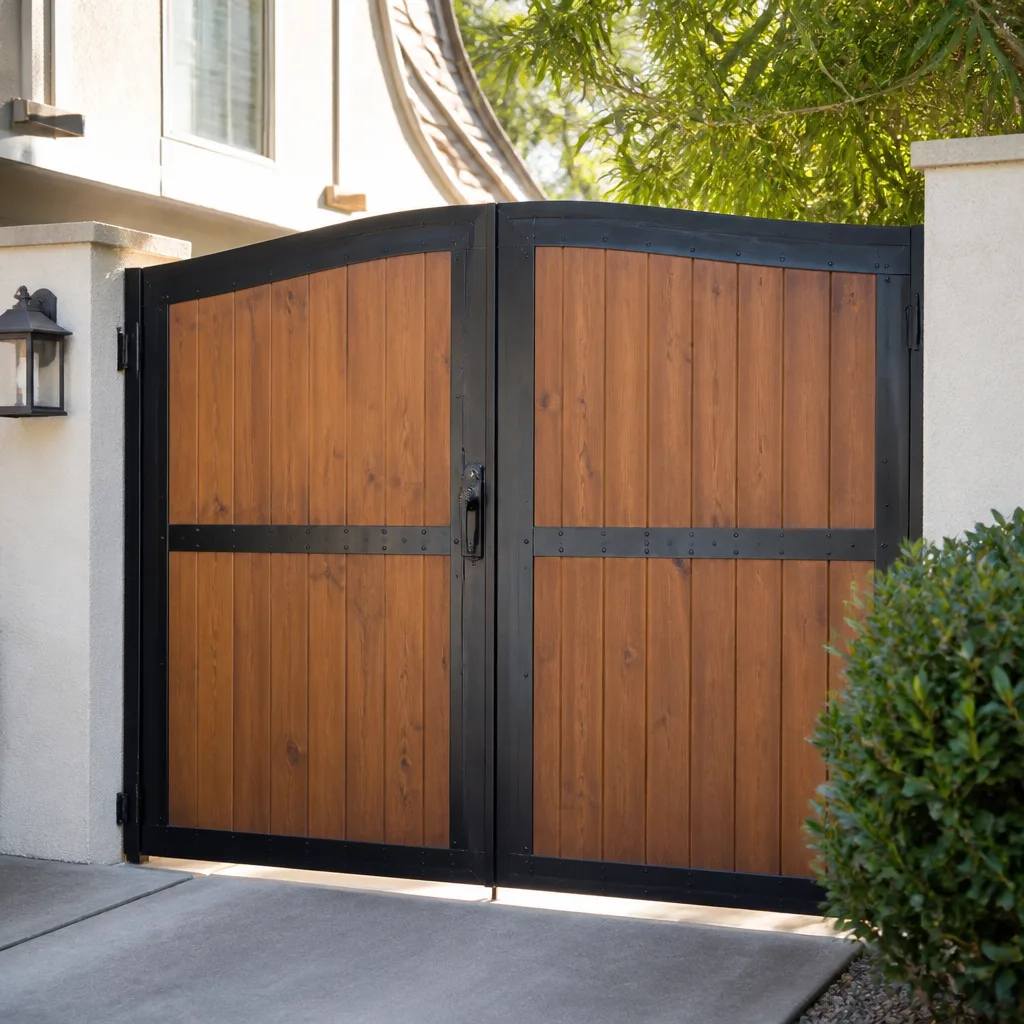 Wood & steel frame
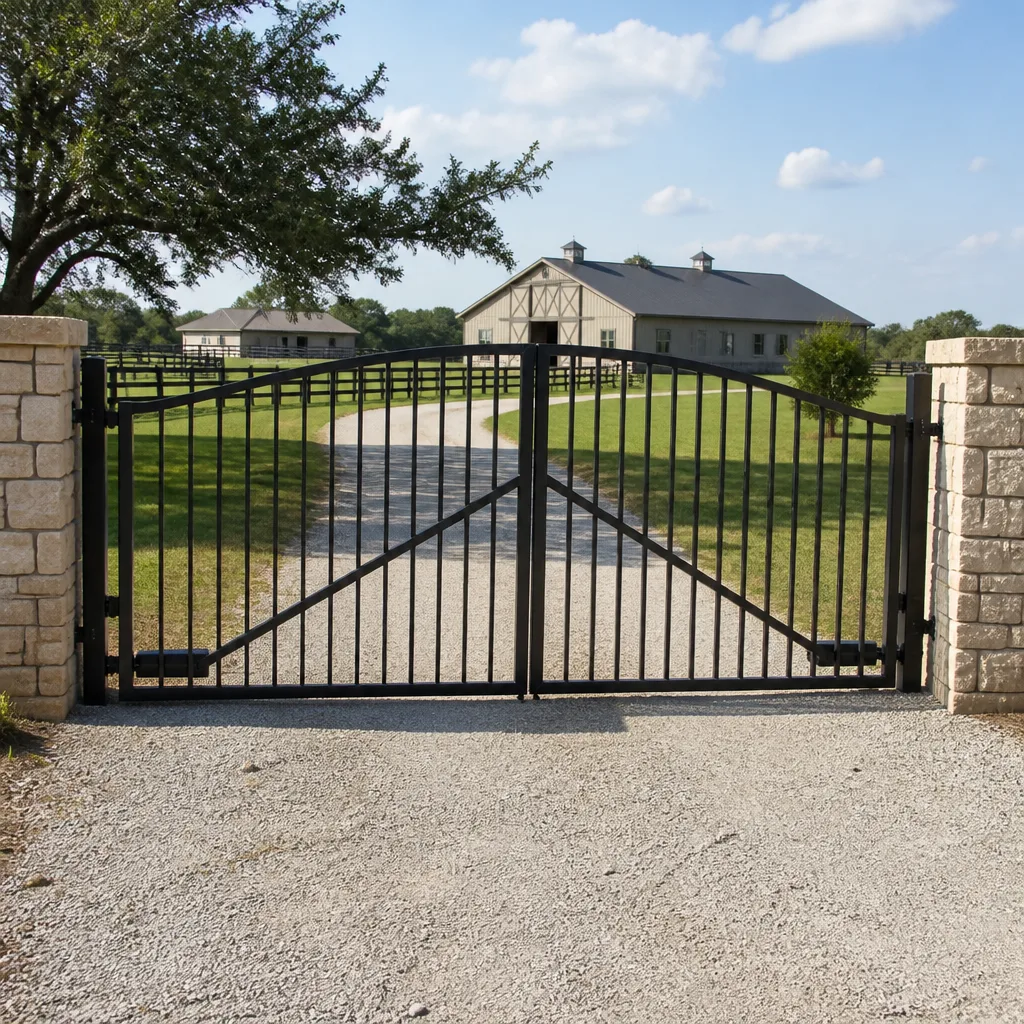 Farm & ranch
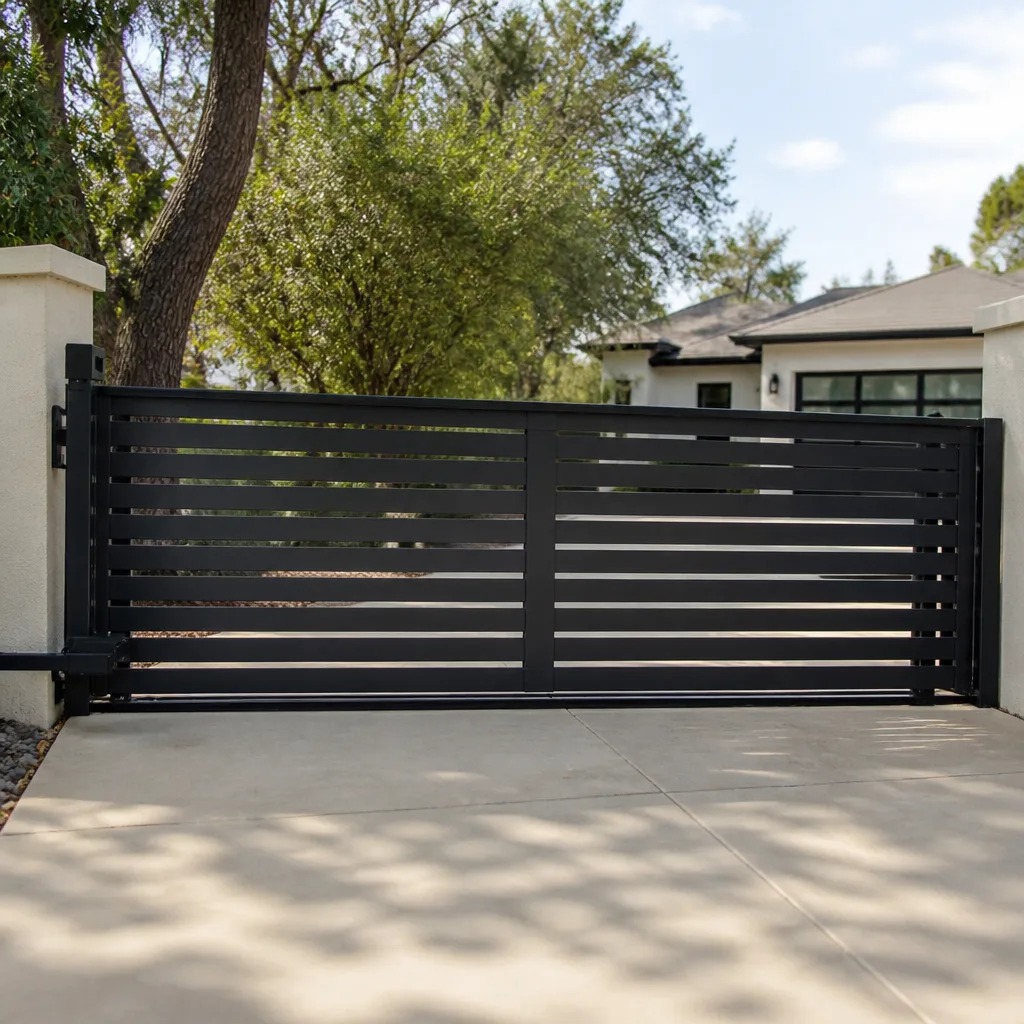 Sliding driveway gates
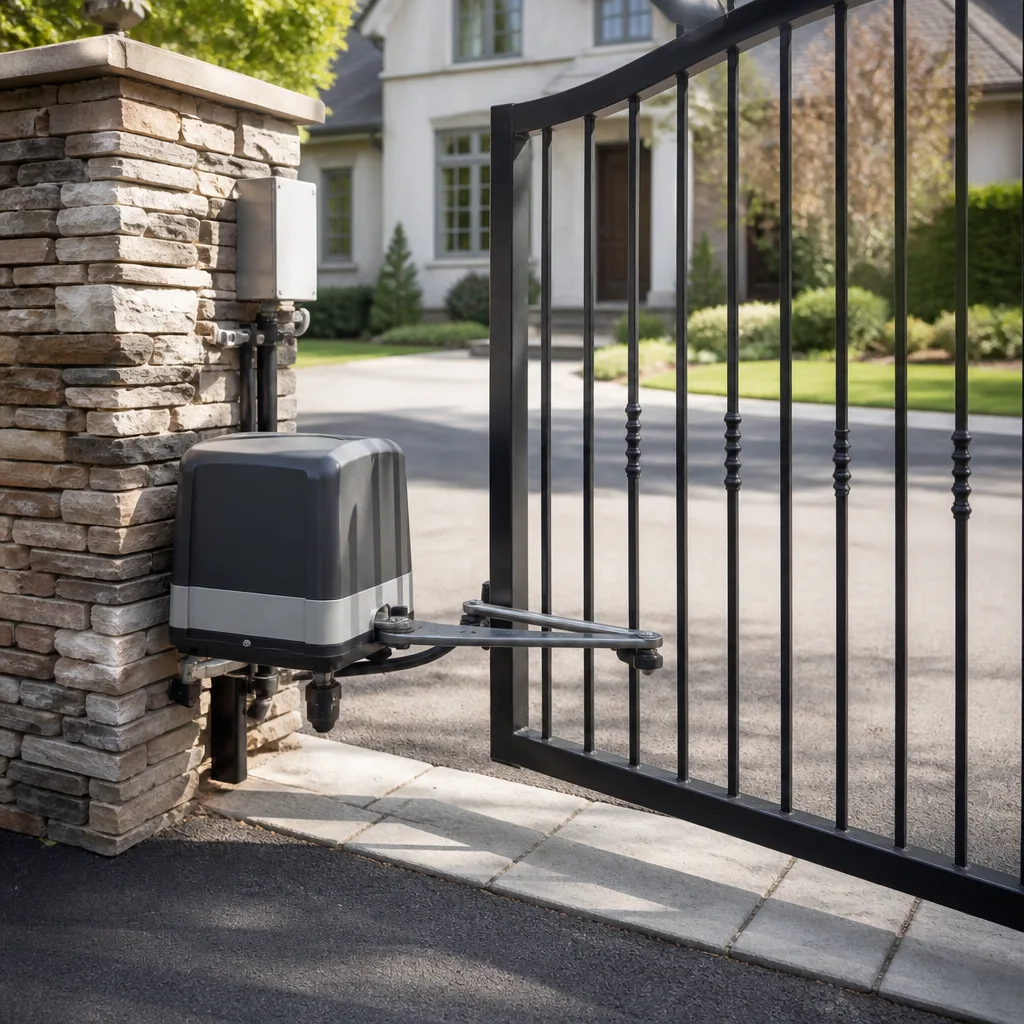 LiftMaster operators
Free on-site gate assessment - hinges, posts, and your LiftMaster or Nice gate operator checked before anything is quoted
The assessment is free and the quote is the invoice.
Get your free estimateGate Repair Emergency Preparedness Guide for San Jose Homes
Most San Jose homeowners discover they have a gate emergency in the worst possible moment: they are already late, the gate is unresponsive, and the manual release is somewhere they have never actually looked. A gate that worked yesterday now blocks the driveway, and nobody in the house knows whether forcing it will make things worse. The misconception is that gate emergencies are rare from here on out because the gate has been reliable so far. The truth is every automated gate has moving parts, control boards, and power dependencies that eventually fail, usually without warning. This guide walks through exactly what to do when that happens, and more importantly, what to prepare now so the emergency costs you twenty minutes instead of an afternoon. We have repaired every failure mode described here across Blossom Valley and the wider San Jose area.
Styles & brands we work with
- Wrought iron
- Wood & steel frame
- Farm & ranch
- Sliding driveway gates
- LiftMaster operators
Quick Answer
Gate emergencies in San Jose fall into two categories with opposite risks: a gate stuck open (security exposure) and a gate stuck closed (access blockage). The immediate response for either is to use the manual release mechanism, which takes under 60 seconds once you know where it is located on your specific operator. Preparation is the actual fix: testing the release now, knowing your operator brand and model, and having a gate repair contact you recognize before the failure happens.
Table of Contents
- The Two Gate Emergencies San Jose Homeowners Actually Face
- Manual Release Procedures by Operator Type
- The Gate Stuck Open Protocol
- The Gate Stuck Closed Protocol
- Pre-Emergency Preparation Checklist
- Battery Backup and San Jose Power Outages
- What to Have Ready When You Call
- Common Mistakes to Avoid
- When to Call a Professional
- Frequently Asked Questions
- The Bottom Line
The Two Gate Emergencies San Jose Homeowners Actually Face
An automated gate failure is never just one problem. The same broken control board or stripped gear produces two completely different emergencies depending on where the gate stops. A San Jose home with a gate stuck open has lost its perimeter security. A home with a gate stuck closed has lost vehicle access, and in some cases, the ability to get an ambulance or fire truck onto the property.
These are not equal emergencies in terms of legal exposure. If an emergency vehicle cannot reach a property because a gate is inoperable, the property owner bears responsibility for that access obstruction under San Jose city requirements for emergency access. Most driveways with automated gates are considered part of the fire department access path, especially on larger lots in the Almaden Valley foothills and the hillside streets above Blossom Valley. A gate that will not open is not just inconvenient. It becomes a liability the moment access is needed.
The gate stuck open creates a different problem set entirely. A driveway gate that stays open leaves the property exposed to theft, unwanted vehicles, and in neighborhoods near San Jose’s hillside trailheads, the occasional confused driver turning around. For homes with a secondary pedestrian gate, the open driveway gate may not matter much. For homes where the driveway gate is the only gate, it matters a great deal.
The rest of this guide treats these as separate protocols because they require different immediate actions. The repair itself may be identical, but the first ten minutes should not be.
Manual Release Procedures by Operator Type
Every automated gate operator sold in the United States includes a manual release that disconnects the gate from the motor drive. This release allows the gate to be pushed by hand when the operator has no power or has failed mechanically. The release procedure differs by operator type, and using the wrong technique can damage the operator beyond the original failure. This section covers the three operator styles most common on San Jose residential properties.
Swing Arm Operators: LiftMaster LA400 and LA500 Series
Swing arm operators use a motorized arm that pivots a gate leaf on its hinge. The manual release on these units is typically a lever or knob on the top or side of the operator housing. The procedure:
- Locate the operator box mounted on the gate or gate post near the hinge side.
- Find the manual release lever. On LiftMaster swing arm models it is often a flat metal lever that rotates a quarter turn.
- Pull or rotate the lever according to the direction printed on the unit. This disengages the internal gear train from the arm.
- Push the gate leaf slowly by hand to confirm it moves freely. Do not force it past its normal travel arc.
- Leave the gate in whatever position is safest for your situation: closed and latched, or fully open and secured.
What not to do: never attempt to move a swing gate without first confirming the release has fully disengaged. A partially engaged gear train will strip teeth when the gate is forced. If the gate feels heavier than expected, the hinges or the operator itself may have a mechanical bind. Pushing harder is how gears get destroyed.
Slide Gate Operators: Viking and Elite
Slide gates roll horizontally on a track or use a cantilever design. The operator sits near the gate post and drives a chain or belt connected to the gate frame. The manual release on Viking and Elite slide operators is almost always a mechanical clutch or a chain release plate.
- Look for the release handle on the side of the operator cabinet or near the chain sprocket.
- Viking units commonly use a handle that lifts or rotates to relieve tension on the drive chain.
- Elite operators may use a T-handle that pulls out to release the chain tensioner.
- Once released, slide the gate manually. It should move with moderate effort. If it binds on the track, stop and check for debris rather than forcing it.
- Secure the gate with a chain or lock if you cannot leave it closed another way.
What not to do: a slide gate that has come off its track should not be pushed, pulled, or lifted by hand. A cantilever gate off its support rollers can fall. This is a crush hazard. Any slide gate that binds, tilts, or feels as though it is bearing weight unevenly should be left alone until a technician can assess it.
Underground Actuators: FAAC and BFT
Underground swing gate actuators are popular on high-end San Jose properties because the operator is hidden inside a foundation box beneath the hinge. FAAC and BFT are the dominant brands in this category locally. The manual release on these systems is located at the top of the underground box, usually under a small access cover.
- Locate the underground actuator box. It will be a metal or composite lid near the hinge post, often set flush with the driveway surface.
- Open the lid. On FAAC units, a release key or hex tool is often required. Some BFT models include a flip-up release handle.
- Turn the release mechanism counterclockwise (follow the direction marked on the box) to disengage the hydraulic or electromechanical drive from the gate leaf.
- Move the gate by hand. Underground actuators typically provide no resistance once released.
- Close and re-latch the access lid to prevent trip hazards.
What not to do: never use the release on an underground actuator until the gate is fully stopped. These systems are hydraulic or gear-driven, and releasing under load is a good way to send a gate leaf swinging uncontrolled. Also, do not leave the lid open. An open underground actuator box in a driveway is a broken ankle waiting to happen.
The Gate Stuck Open Protocol
A gate that fails in the open position is the less urgent emergency for most homeowners, but it becomes urgent the longer it stays open. If your San Jose home relies on the gate for security, especially on streets with regular foot traffic or properties where the driveway is screened from the house, an open gate is an invitation.
The first step is to determine whether the gate can be manually moved at all. Use the release procedure for your operator type and try to close it by hand. If the gate closes and latches, your immediate security problem is solved even though the operator itself remains broken. Park vehicles inside if possible, or lock the gate closed with a chain and padlock if you need to leave by another route.
If the gate cannot be manually closed, the temporary security response depends on what the gate is protecting:
- Driveway gate on a residential lot: Secure vehicles by locking them and removing any items from inside. If the garage is accessible, use it. Inform anyone else in the household that the gate is disabled.
- Gate with a separate pedestrian gate: Confirm the pedestrian gate still latches and use it as the primary entry point. Many San Jose homes in Blossom Valley and Almaden have this configuration.
- Gate monitored by a security company or HOA: Call the monitoring company or property manager and tell them the gate has failed open. They need to know so they do not treat an open-gate alarm as a false condition they can ignore.
- Gate that cannot be secured at all: Call for repair rather than improvising. In our experience, a swinging gate that cannot be secured manually often has a broken hinge or a failed opener arm that will only get worse.
One thing not to do: never prop a partially open gate with boards, blocks, or wedges. These can slip, and a heavy gate leaf coming down on a person is a serious injury risk. If the gate cannot be secured properly, leave it where it is and call a technician.
For electric gate failures, the issue is often a control board that has lost its limit settings or a safety sensor that is reporting an obstruction. In both cases the gate may default to open as a safety measure. This is normal behavior, not a sign that the operator is completely dead. The repair is usually straightforward once the fault is identified. Our electric gate repair work in San Jose frequently starts with exactly this scenario: a gate that stopped in the open position because a photo eye was misaligned or covered.
The Gate Stuck Closed Protocol
A gate stuck closed is a different and sometimes more serious emergency. Your vehicles are trapped, or by extension, you cannot get a vehicle onto or off the property. That is inconvenient. But the more significant risk is that emergency services cannot get in.
San Jose Fire Department engines and ambulances cannot force their way past a closed driveway gate without damaging it, and they will not wait long trying. If your only vehicle access is blocked and someone on the property needs medical help, the delay matters. This is why the manual release needs to be tested before any emergency, not discovered during one.
When a gate fails closed, work through these steps in order:
- Use the manual release immediately. For every operator type covered above, the release is designed to be operated by a person with no special tools. Do it now, not after trying the remote five more times.
- Move the gate by hand to the open position. Once released, the gate should move. Secure it in the open position so it cannot swing or slide back across the driveway.
- If the gate will not move after release, stop pushing. The operator may not be the problem. A broken hinge, a dropped gate wheel, or a seized bearing will produce the same symptom, and forcing it can cause the gate to fall.
- Check for visible damage. A gate that suddenly stopped responding after a storm or a vehicle strike may have shifted on its mounting. Look for fresh cracks, gaps at the hinge, or a wheel that is no longer on its track.
- Call for repair with the information in the next section ready. A technician who knows the operator brand and the failure symptoms can often diagnose the problem by phone and bring the right parts on the first trip.
The emotional response to a gate stuck closed is to keep pressing the remote, cycling power, and hoping it resets. That rarely works and wastes the time you could spend using the manual release. We tell San Jose homeowners the same thing every time: the manual release is the answer, and if you have not found it yet, find it today.
Pre-Emergency Preparation Checklist
Preparation prevents most of the stress of a gate breakdown. These are the things we recommend to every homeowner we meet during gate repair visits across San Jose, regardless of which brand of operator they have.
- Locate the manual release today. Open the operator housing or access cover and find the release lever, knob, or key. Read the printed instructions. If the operator is a LiftMaster, Viking, FAAC, BFT, or Linear unit, the release will be clearly marked but may require a tool.
- Test the release once. Disengage it, move the gate a few feet by hand, and re-engage it. Note whether the gate moves easily or feels heavy. A gate that suddenly feels heavy is often developing a hinge or wheel problem.
- Write down the operator brand and model number. The model plate is on the operator housing, the control box, or the inside of the access cover. Take a photo with your phone. This single piece of information saves more time than anything else when calling for help.
- Know where the power disconnect is. Most operators have a dedicated circuit breaker or a fused disconnect near the gate. Label it if it is not labeled. You may need to cut power to the operator before a technician works on it.
- Have a backup access method. A pedestrian gate, a side door, or a garage exit path that does not depend on the driveway gate. If the gate is the only way in, this checklist item moves to the top.
- Know your gate contractor’s phone number. When a gate fails at 6am on a workday, you will not want to start researching. Program the number into your phone. We answer 24/7 at Gate Repair Blossom Valley for exactly this reason.
- Test battery backup if you have one. San Jose hillside homes with battery-backed operators should exercise the battery at least twice per year. Most batteries have a test button on the control board or battery enclosure.
None of these steps takes more than a few minutes, and none requires a technician. The point is to do them now, in daylight, with no pressure. A homeowner who has done all seven can handle a gate failure calmly. A homeowner who has not done them is starting from zero at the worst moment.
Battery Backup and San Jose Power Outages
PG&E power outages are a recurring reality in San Jose, particularly in the foothill neighborhoods above Almaden and Blossom Valley where lines run through wooded areas. For homeowners with automated gates, a power failure means the gate stops operating unless a battery backup system is installed. This is a plain statement of how the equipment works: the operator runs on household current, and when that current stops, the operator stops.
Battery backup systems prevent the most common power-related gate emergency: a gate that will neither open nor close when the power is out. These systems are available as factory options on many LiftMaster, FAAC, BFT, Viking, and Linear operators, and as aftermarket add-ons for others. They work by keeping the control board energized and the motor powered for a limited number of cycles when the grid goes down.
The battery does not last forever. Most backup batteries are rated for a set number of open-close cycles per outage, not for days of continuous operation. A household that cycles the gate ten times during a six-hour outage may exhaust the battery before the power returns. The manual release remains the fallback.
For San Jose homeowners considering a battery backup, the decision comes down to this: do you need to get vehicles in and out during an outage, and can you operate the gate manually if the battery dies? A property where the driveway is steep, the gate is heavy, or the person responsible for the gate cannot move it by hand should prioritize a battery backup. A property where the gate is lightweight and the release is easy to reach may be fine relying on the manual procedure.
If a battery backup is already installed and the gate fails during an outage, check the battery status indicator on the control board before assuming the operator is broken. A dead backup battery and a failed operator look identical from inside the car. The battery is replaceable, and in our experience it is one of the most common electric gate repair requests in San Jose after a storm season.
What to Have Ready When You Call
When a gate fails, the faster a technician understands what they are dealing with, the faster the gate comes back. A phone call that starts with “my gate is broken” takes longer to triage than one that starts with the operator brand and what the gate is doing. Here is what speeds up the response.
Operator brand and model: The first thing a technician asks. The brand tells us what fault codes to expect, where the manual release is, and what parts might be involved. The model narrows it further. We work across nine brands in San Jose, including FAAC, BFT, Linear, and Viking, so the brand name alone starts the diagnosis.
Gate type and approximate age: Swing or slide, single leaf or double leaf, and whether the gate is roughly five years old or fifteen. Age matters because operator generations change, and parts availability differs.
Fault display code if visible: Many modern operators show a numeric or flashing-light code on the control board or an external display. If you can safely open the control box and read or photograph the code, it is worth doing. Write down the exact sequence. We can often identify the fault by phone from this code alone.
What the gate is doing exactly: Not responding at all, responding but not moving, opening partway and reversing, opening but not closing, or moving slowly. Each behavior points to a different failure mode.
Recent events: Was there a power outage, storm, vehicle strike, or any work done near the gate? Altered soil, new landscaping, or a mower hit to a photo eye are common triggers.
Whether the manual release has been tried: If you have already moved the gate manually, the technician knows the drive system is disengaged and may need re-engagement. That changes the first steps on site.
The call itself goes to (877) 358-4473. We answer 24/7. Fast dispatch from 7am to 7pm, Sunday through Friday. The estimate is free, and the price is agreed before any work starts.
Common Mistakes to Avoid
- Forcing a gate that has not been released. A gate that fails to move under power should not be pushed, pulled, or driven against. The motor is still engaged until the manual release is used. Forcing the gate strips gears and turns a control board failure into a full operator replacement.
- Waiting to locate the manual release until the gate fails. The release is often behind a cover, under a lid, or requires a small tool. Finding it in the dark while late for work is a recipe for frustration and damage. San Jose homeowners who test it once never have this problem.
- Ignoring a gate that is slower than usual. A gate that has gradually slowed down over weeks or months is telling you something. The motor, the hinges, or the drive mechanism is wearing. The failure is coming. Slowness before a dead stop is one of the most common patterns we see in San Jose gate repair calls.
- Prop open a partially open gate with objects. Boards, blocks, and wedges slip. A heavy gate leaf falling on a person or a vehicle is a life-changing injury. If the gate cannot be properly secured, leave it and call for help.
- Resetting the breaker repeatedly. A breaker that trips once is a curiosity. A breaker that trips repeatedly is a fault. Continuing to reset it can damage the control board and creates a fire hazard. One reset is reasonable. If it trips again, cut power and call.
- Trying to troubleshoot the control board with the power on. The control board on any automated gate operator carries line voltage and low-voltage control circuits. Probing it while energized, especially in wet conditions, is a shock hazard. Electric gate repair on control boards and wiring should be left to a technician who works on these systems regularly.
- Assuming the gate cannot be fixed because it is old. Old does not mean unrepairable. We work on operators across nine brands and many generations. A proper diagnosis often saves a functioning gate from a premature replacement.
When to Call a Professional
Some gate problems are safe to investigate as a homeowner: a tripped breaker, a dead remote battery, a photo eye blocked by leaves. Others require a technician with experience on the specific operator brand. Call a professional when the gate has mechanical damage to a hinge, wheel, or the gate frame itself. A heavy gate leaf under tension is dangerous to work around without the right equipment and training. Call when the control board is showing fault codes, when the operator smells burnt, or when any wiring is exposed or arcing. Electrical faults in a gate operator are a shock and fire risk, not a weekend project. Call when the manual release does not free the gate, which usually indicates a mechanical bind that should not be forced.
We work on your brand, whether that is FAAC, BFT, Linear, Viking, or any of the other systems common in San Jose. The diagnosis is based on the specific system, not guesswork. Gate Repair Blossom Valley offers free estimates in San Jose. Call (877) 358-4473 and the estimate is free, with the final price set in writing before work begins.
Frequently Asked Questions
The fastest way is the manual release on the operator, which disconnects the gate from the motor so it can be pushed by hand. The release takes under 60 seconds on most San Jose residential gates once you know where it is located. Call (877) 358-4473 if you cannot find or operate it.
The cost depends on the operator brand, the failed component, and whether parts are available locally. The estimate is free, and the price is agreed in writing before any work starts. Call (877) 358-4473 for a quote on your specific gate and failure.
Fast dispatch from 7am to 7pm, Sunday through Friday. Same-day service is available for most San Jose gate failures when the call comes in early enough for a technician to reach the property. We answer 24/7 at (877) 358-4473.
A battery backup will keep the gate operating for a limited number of cycles during an outage, which is enough for most San Jose power interruptions. Once the battery depletes, the manual release is the fallback. The battery needs periodic testing and eventual replacement.
Use the manual release, then check whether the gate moves freely by hand. If it moves, the operator is the likely fault. If it will not move, a hinge, wheel, or track problem is likely and the gate should not be forced. Call (877) 358-4473 and describe the symptom in as much detail as you can.
Most gate repairs that replace an operator or control board are considered maintenance and do not require a permit. New gate installations or modifications to the gate structure may require city review, so ask San Jose’s building department about your specific scope. We can explain what the work involves before any permit question comes up.
The Bottom Line
A gate emergency is manageable when the manual release has been located, tested, and the operator brand is written down somewhere accessible. A gate stuck open and a gate stuck closed require different immediate responses, but both start with the same principle: disengage the drive system, move the gate by hand, and secure it. Forcing a gate that has not been released is how small failures become expensive replacements. San Jose homeowners who prepare in advance will move through a gate failure in under an hour. Those who do not will spend the same hour looking for a release lever while the driveway stays blocked. The preparation costs nothing. The repair, when it comes, should be diagnosed, not guessed.
Written by the team at Gate Repair Blossom Valley, serving San Jose since 2015.
See the difference
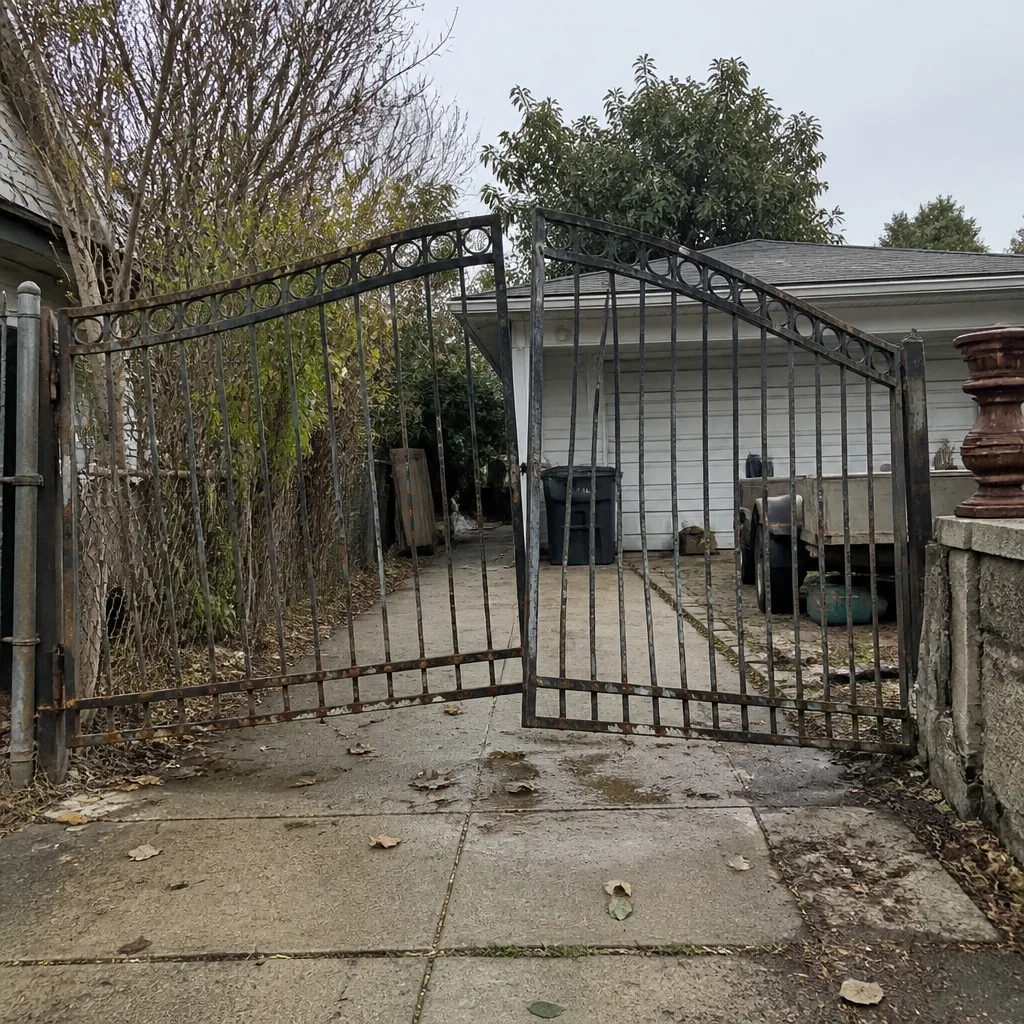 Before
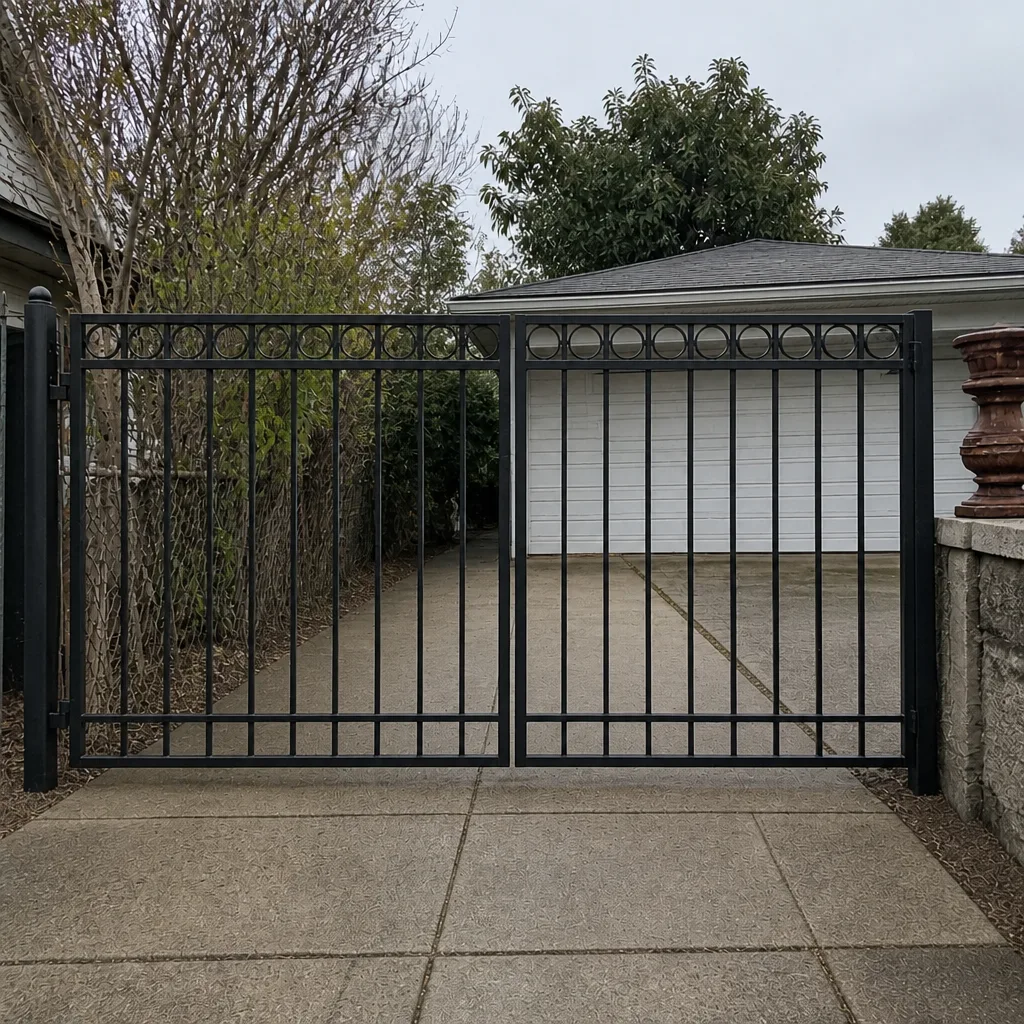 After
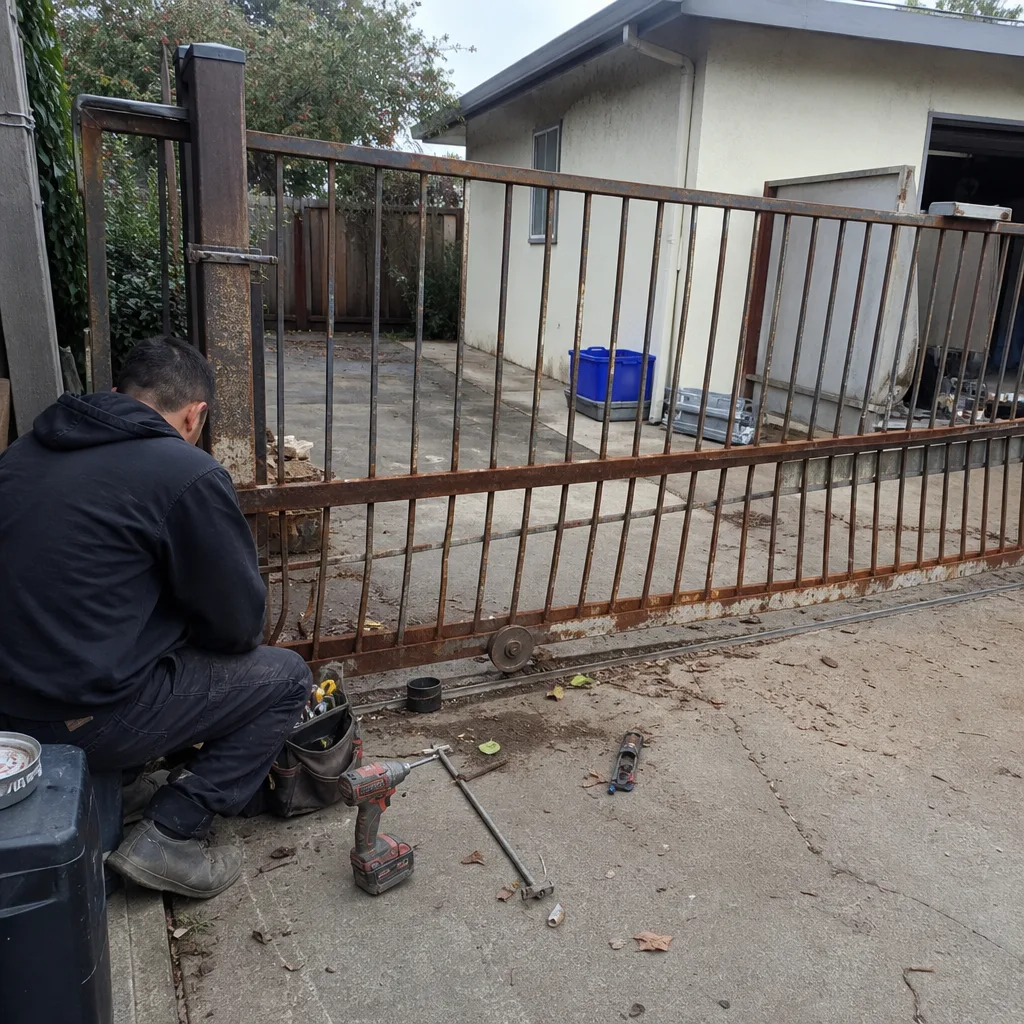 Before
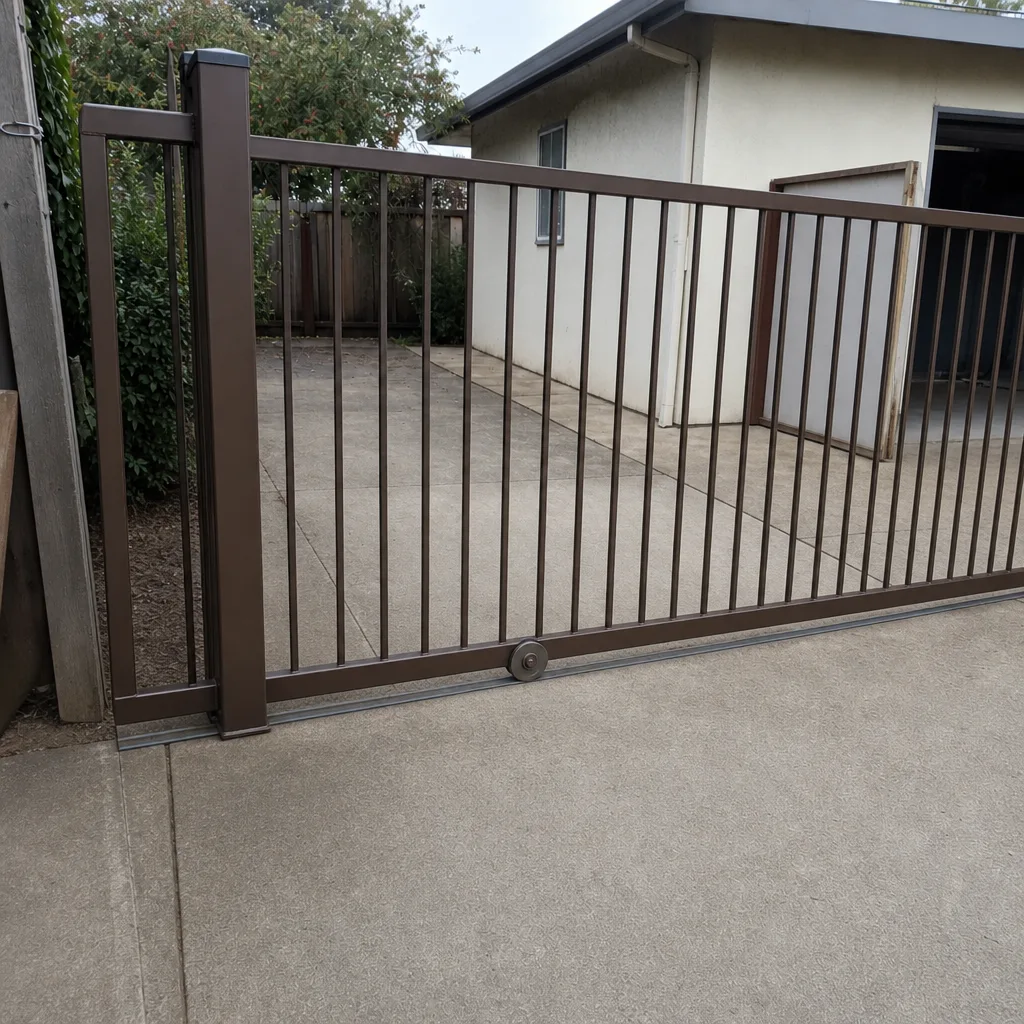 After
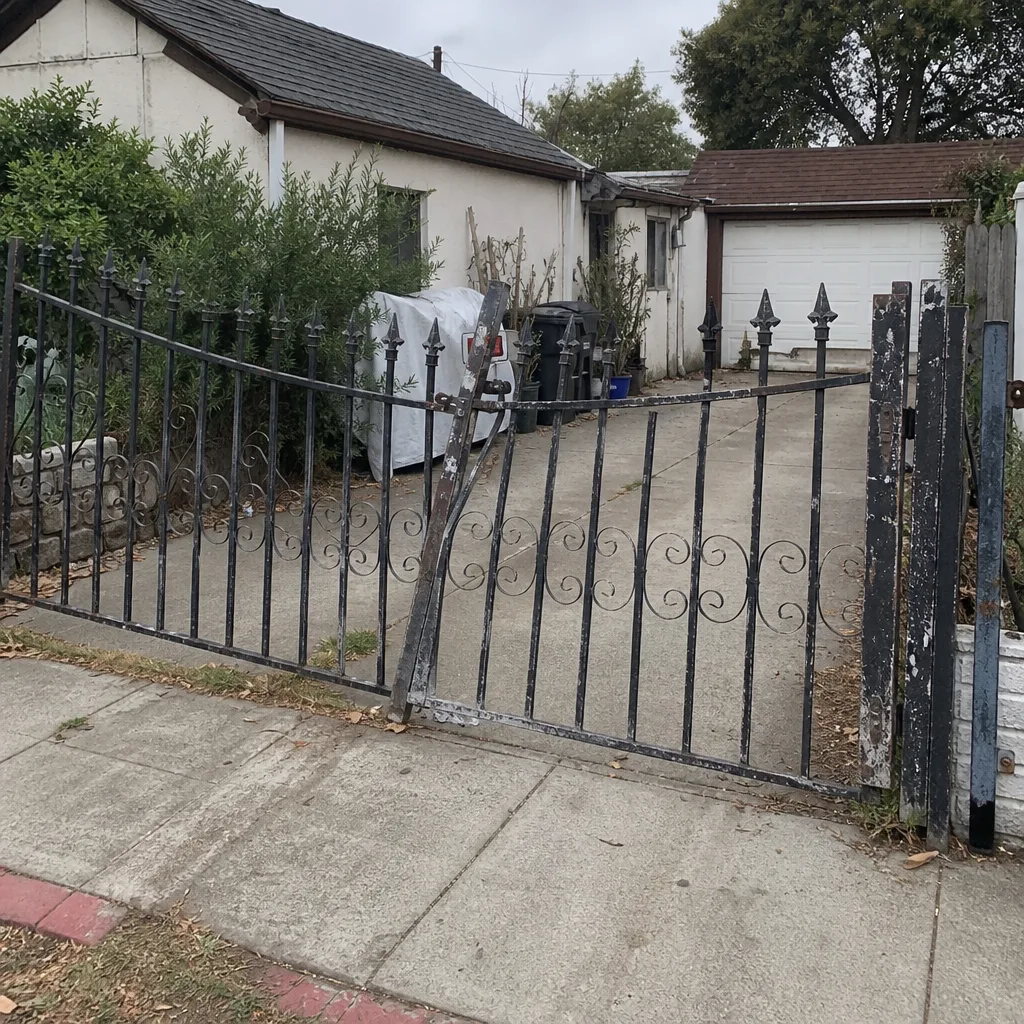 Before
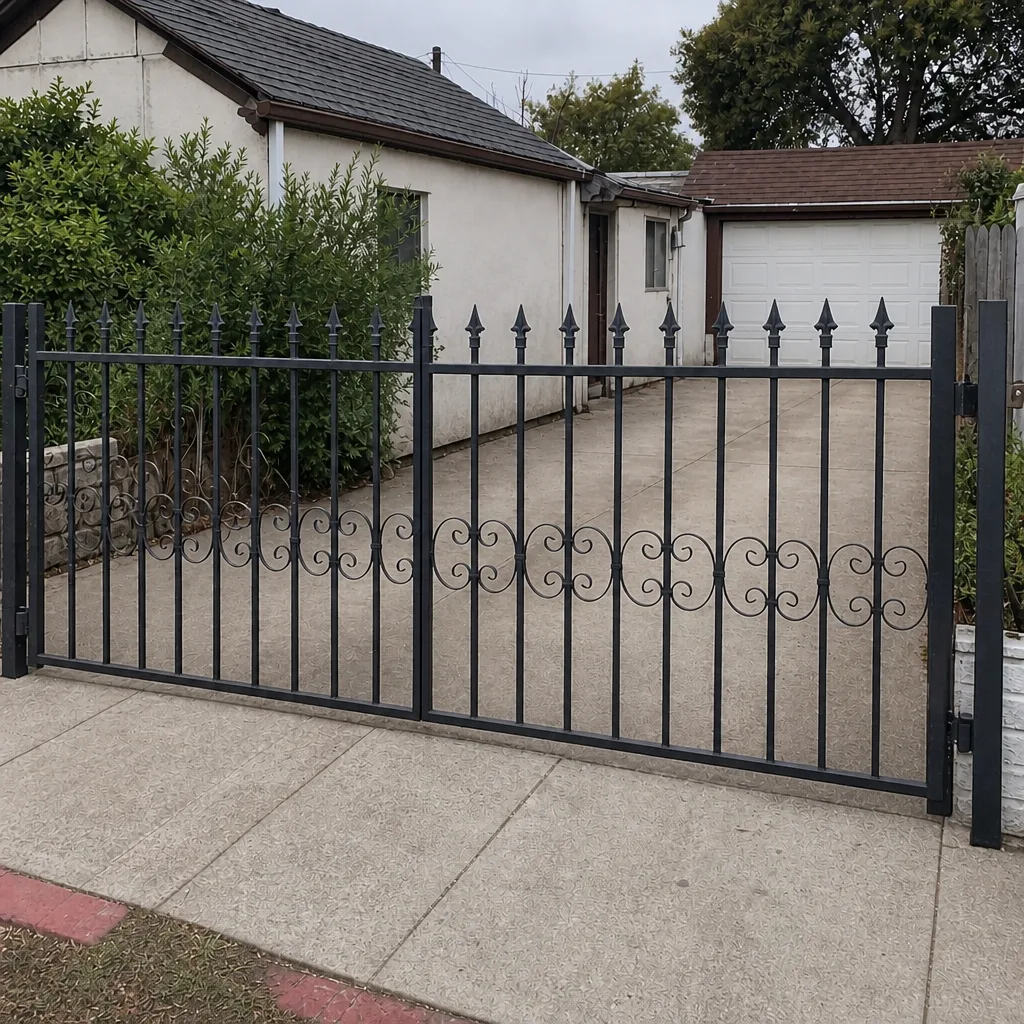 After